I’ve retiled two bathrooms in my life, and the second time I got it right. My first attempt involved trendy large-format gray tiles that looked fashionable for about three years before feeling dated and cold. When I renovated my second bathroom, I chose white Victorian tiles, and the difference in how the finished space feels is difficult to overstate. There’s a timelessness to Victorian tiling that trendy alternatives simply cannot offer, and I find myself genuinely grateful for making the more considered choice.
White Victorian bathroom tiles draw from a specific design heritage rooted in 19th century Britain, when public bathhouses and private bathrooms alike used small, durable, geometric tiles for both practical and aesthetic reasons. The classic expressions of this style include white octagonal floor tiles with small black dot insets, white brick-pattern wall tiles with beveled edges, and encaustic cement tiles featuring geometric patterns in black and white. Each format has its own character, but all share that quality of looking simultaneously historic and completely current that defines truly enduring design.

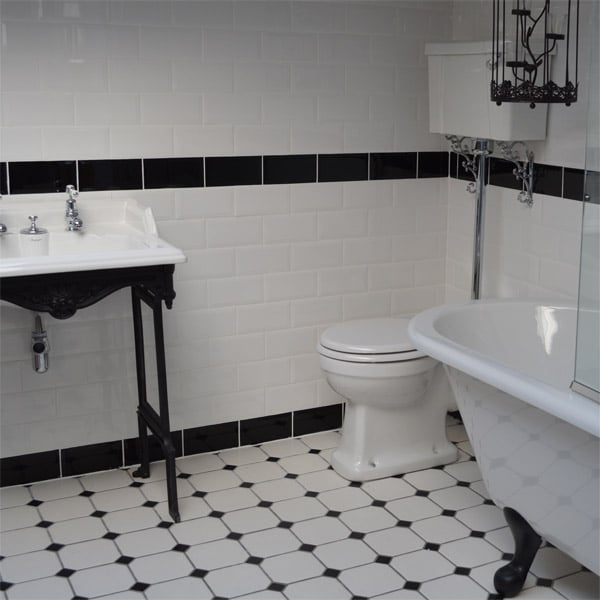
My floor choice was white octagonal ceramic tiles with black penny dot inserts, which is probably the most recognizable Victorian tile pattern in existence. Laying them out before installation and seeing the geometric rhythm they created gave me a satisfaction I hadn’t felt with my previous gray tiles. The pattern has movement and intelligence without being loud or demanding. It works as a backdrop rather than a focal point, which means it supports whatever fixtures and accessories you place in the room without competing with them for visual attention.
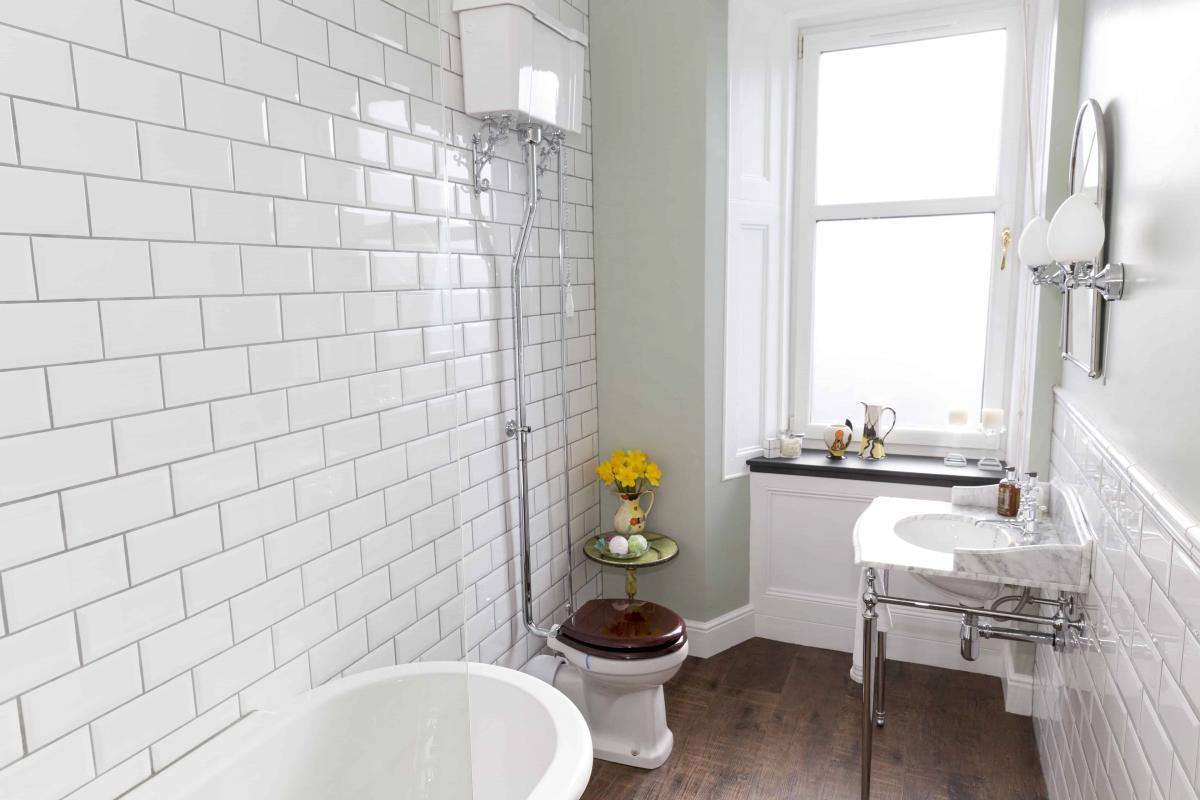
Wall tiles were a decision I initially overthought. I considered patterned encaustic tiles for the lower walls before realizing that combining a patterned floor with patterned walls would create visual noise rather than visual interest. I settled on classic white subway tiles with a beveled edge and a bright glaze for the walls, installed in a traditional brick pattern. The beveled edge catches light beautifully and adds a subtle dimensionality that flat tiles don’t provide. Against white walls, my fixtures and fittings stand out clearly rather than disappearing into a busy background.

Grout color is a decision that carries more weight than most people anticipate before they’ve lived with their choice. I used a warm white grout on my wall tiles and a traditional dark charcoal grout between my floor tiles, which is historically accurate for Victorian floor patterns and makes the geometric design pop clearly. White grout on white tiles creates a softer, more seamless look that reads as cleaner initially but shows dirt and discoloration more readily over time. Charcoal or gray grout on floors is a practical choice that ages gracefully while reinforcing the period character of the pattern.
Layout and installation planning took considerably more time than I expected, and I’m glad I invested that time upfront. Victorian floor tile patterns require careful centering to look intentional rather than awkwardly cropped at the edges. I worked with my tile installer to establish a center point in the room and work outward symmetrically, which meant cutting border tiles but ensuring the pattern felt balanced from every entry point. Rushing this planning stage is the most common mistake I’ve seen in Victorian tile installations, and the results of poor planning are visible every single day afterward.

Material selection matters more in Victorian-style tiling than the aesthetic alone suggests. Traditional Victorian tiles were made from encaustic cement or ceramic, and both remain excellent choices today. Ceramic is more affordable, widely available, and perfectly suited to walls and light-traffic floors. Porcelain offers greater density and water resistance, making it ideal for shower floors and high-traffic areas. I used ceramic for my walls and porcelain for my floor, which gave me the authentic visual character I wanted with the durability the floor specifically required for long-term performance.
One of the unexpected pleasures of white Victorian tiles is how beautifully they interact with different fixture styles. My white tiles work equally well with the polished chrome fixtures I originally paired them with and the brushed brass fixtures I later switched to when updating the bathroom accessories. Victorian tiling has this remarkable neutrality beneath its strong aesthetic character. It accepts warm metal tones, cool chrome, painted wood, natural stone accessories, and almost any color of towel or bath mat without clashing or demanding specific accompaniments, which gives the space lasting flexibility.

Maintenance is simpler than many people assume when they hear the word grout. I seal my grout lines once yearly with a penetrating grout sealer, which takes about thirty minutes and dramatically reduces staining and moisture penetration. For daily cleaning, a spray of diluted white vinegar and a microfiber cloth keeps the white tiles bright without harsh chemicals that degrade grout over time. The charcoal floor grout hides everyday dirt far better than lighter alternatives, which means my floor looks presentable between cleanings in a way that white-grouted floors genuinely struggle to maintain.
Looking back at both of my bathroom tile choices, the contrast between following a trend and choosing a classic becomes very clear. My gray tiles required a full renovation within six years because they no longer felt right in the space. My Victorian tiles feel as appropriate and pleasing today as the day I installed them, and I have no desire to change them. Good design that’s grounded in history tends to age the way a well-made piece of furniture ages, becoming more settled and comfortable over time rather than more worn out. That’s the quiet promise white Victorian bathroom tiles make, and in my experience, they keep it completely.

Are white Victorian tiles suitable for a modern bathroom?
Absolutely, and I’d argue they’re one of the best choices for a modern bathroom precisely because they don’t anchor the space to a single era. White subway tiles and octagonal floor tiles with black inserts read as both historic and contemporary simultaneously. I’ve seen them paired beautifully with minimalist modern fixtures, industrial metal accents, and even Scandinavian-style accessories. Their visual neutrality is a genuine design asset that more overtly trendy tiles simply cannot offer over a long period.
How do I keep white grout from discoloring over time?
Annual sealing is the most effective preventive measure I’ve found. A penetrating grout sealer applied once yearly creates a protective barrier that resists staining and moisture absorption without changing the grout’s appearance. For daily maintenance, avoid harsh bleach-based cleaners that degrade grout over time and instead use diluted white vinegar or a pH-neutral tile cleaner. If discoloration does develop, a grout pen in the matching color provides a quick cosmetic fix while you plan a more thorough cleaning or regrouting.
What’s the difference between ceramic and porcelain for Victorian-style tiles?
Ceramic is less dense, easier to cut, and more affordable, making it excellent for walls and low-traffic floors. Porcelain is fired at higher temperatures, creating a denser, harder, less porous tile that performs better in wet areas and under heavy foot traffic. For Victorian bathroom projects, I use ceramic on walls and porcelain on floors. Both achieve the same visual character, but porcelain’s durability on floors means it maintains its appearance and structural integrity far longer under the daily demands of bathroom use.
How important is professional installation for Victorian floor tile patterns?
Genuinely important, in my experience. The geometric patterns of Victorian floor tiles require precise centering and careful planning to look intentional rather than awkwardly cropped at room edges. An experienced tile installer will establish a true center point, account for out-of-square walls, and ensure the pattern reads symmetrically from the doorway. DIY installation is possible for someone with real tiling experience, but Victorian floor patterns are less forgiving of errors than simple grid layouts, and mistakes are visible every day in a heavily used space.
What size tiles are most authentic for a Victorian bathroom style?
Traditional Victorian floor tiles were small, typically one to two inch hexagons, penny rounds, or the classic octagon-and-dot format in two to three inch octagons. Wall tiles in the Victorian era were commonly three by six inches in a brick pattern, which is the format we now call subway tile. Staying within these smaller formats maintains the historical authenticity and visual rhythm of the style. Larger format tiles, even in white, lose the characteristic pattern density that makes Victorian tiling visually distinctive and period-appropriate.
What’s a realistic budget for tiling a bathroom in Victorian style?
Material costs for quality ceramic Victorian-style tiles typically run $3 to $8 per square foot for walls and $4 to $10 per square foot for floor tile including the dot inserts. Professional installation adds $8 to $15 per square foot depending on pattern complexity and your location. For an average bathroom of 50 square feet of floor and 120 square feet of wall tile, budget between $2,500 and $5,000 for materials and labor combined. Encaustic cement tiles cost considerably more, sometimes $15 to $30 per square foot, but deliver exceptional character and longevity.
Related Posts:
- Blue Marble Effect Bathroom Tiles
- B An Q Bathroom Tiles
- How To Clean Old Bathroom Tile Floor
- Bathroom Tile Trim Images
- How To Remove Bathroom Tiles Without Breaking Them
- Bathroom Tile Painting Professionals
- B And Q Bathroom Tile Paint
- Bathroom Tile Matching
- Bathroom Tile Ideas Budget
- Bathroom Tiles White Brick