Designing my farmhouse bathroom vanity was one of those projects that started simple and quickly revealed how many decisions were actually involved. I thought I’d pick a cabinet, choose a sink, and be done in an afternoon of browsing. Instead, I spent three weeks making choices about wood species, finish colors, sink materials, hardware styles, and countertop options that all needed to work together coherently. That process taught me more about bathroom design than anything else I’ve done, and I want to share what actually matters when you’re planning a farmhouse vanity.
The farmhouse vanity aesthetic sits at a specific intersection of rustic warmth and functional simplicity that makes it feel both timeless and deeply livable. Unlike sleek modern vanities that prioritize clean lines above all else, or ornate traditional vanities that can feel overly formal, farmhouse vanities strike a balance that reads as genuinely relaxed and welcoming. Furniture-style legs, paneled cabinet doors, apron-front sinks, natural wood tones, and simple hardware are the vocabulary of this style, and understanding that vocabulary helps every subsequent decision feel more grounded and intentional.

Wood selection anchors the entire design, and I treated it as my first committed decision before anything else. Pine is the classic farmhouse choice, affordable, characterful, and absolutely authentic to the style’s rural origins. It dents and marks over time, which some people find charming and others find frustrating, so be honest with yourself about your tolerance for a surface that accumulates a history of use. Oak offers more hardness and a stronger grain character that takes stain beautifully. Poplar is my personal recommendation for painted finishes because its smooth, tight grain accepts paint without the filler coats that pine sometimes requires.
Finish color is where personal expression enters the picture most directly, and the farmhouse palette offers genuine variety within its warm, grounded range. Crisp white is the most popular choice for good reason, it’s bright, clean, and pairs with virtually any wall color or tile. Warm cream or off-white feels softer and more authentically aged than stark white. Sage green has become one of my favorite farmhouse vanity colors because it brings an organic quality that feels connected to nature without trying too hard. Navy or deep charcoal work beautifully in larger bathrooms where a darker vanity creates anchoring contrast against white walls and light tile.

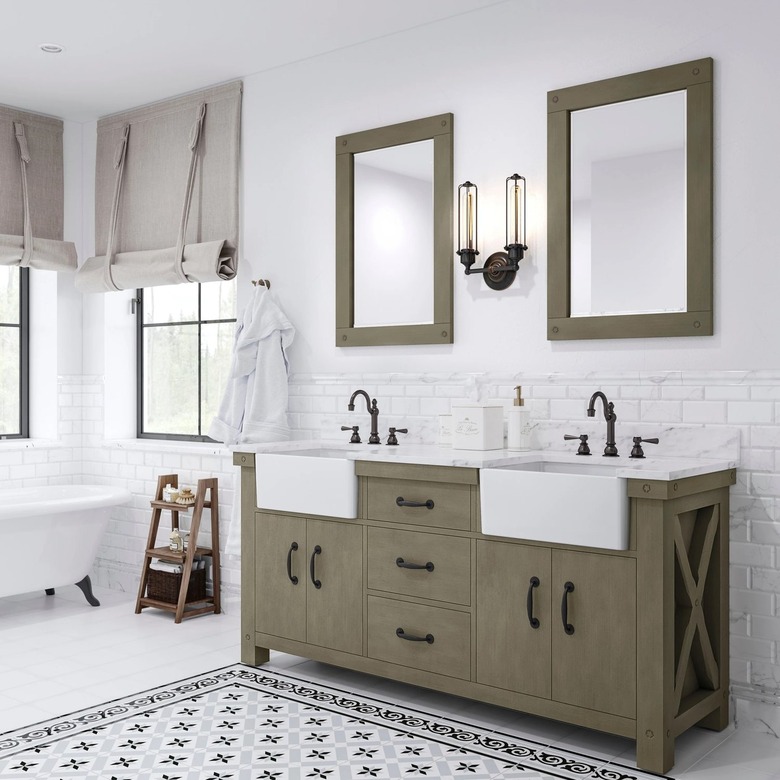
Sink selection for a farmhouse vanity genuinely shapes the entire aesthetic, and the options carry distinctly different personalities. An undermount white ceramic sink is clean, practical, and suits both modern farmhouse and traditional farmhouse styles equally. A vessel sink in stone or ceramic adds a sculptural quality that works well in more design-forward interpretations of the style. For the most authentic farmhouse character, an apron-front or farmhouse sink, with its distinctive exposed front panel, makes an unmistakable statement and works especially well on wider, furniture-style vanity bases with enough width to accommodate the format properly.
Hardware is the detail that either confirms or undermines the whole farmhouse vision, and I’ve seen beautiful vanities diminished by mismatched or inappropriately styled hardware. Oil-rubbed bronze and antique brass are my consistent recommendations for farmhouse bathrooms because both finishes carry warmth and age gracefully rather than showing wear. Bin pulls and cup pulls suit farmhouse drawer fronts particularly well. Simple round knobs in aged brass or hammered iron add authenticity without calling too much attention to themselves. The key principle I follow is keeping all metal finishes in the bathroom consistent across faucets, hardware, light fixtures, and towel bars.

Countertop selection is a decision that affects both daily function and long-term satisfaction in ways that purely visual choices don’t. Butcher block wood countertops are breathtakingly beautiful on farmhouse vanities and create warmth that stone simply can’t replicate, but they require regular oiling and careful moisture management around the sink area. Marble and marble-look quartz offer elegance and practical durability with less maintenance. Honed concrete countertops suit industrial farmhouse interpretations with rugged authenticity. I chose a honed white marble look quartz that reads as organic and soft without the sealing requirements that genuine marble demands in a bathroom environment.
Open shelving below the sink is a farmhouse vanity idea I initially resisted before coming around to it completely. Replacing lower cabinet doors with open shelving creates an airy, cottage-like quality that closed cabinets can’t produce. I use woven baskets on the lower shelves to contain toiletries and cleaning supplies, which gives the open section an organized, curated appearance rather than a chaotic one. The baskets themselves contribute texture and warmth that align perfectly with farmhouse character. If your daily habits run toward tidiness naturally, open shelving below a farmhouse vanity is one of the most charming solutions available at any budget level.

Repurposed furniture as a vanity base is a farmhouse idea that appeals to me both aesthetically and philosophically. Converting an antique dresser into a bathroom vanity by cutting a sink opening, adding plumbing, and sealing the surfaces creates a piece with genuine history and character that no new reproduction can fully replicate. I’ve seen beautiful examples using old pine dressers, painted buffet tables, and even vintage sewing cabinets converted into petite single-sink vanities. The practical requirements include ensuring the furniture is deep enough for standard plumbing connections and that all wood surfaces are properly sealed against bathroom moisture before installation.
After completing my own farmhouse vanity and living with it through several seasons, what I appreciate most is how the style ages. Unlike trend-driven designs that feel exciting initially but demand updating as fashions shift, a well-executed farmhouse vanity settles into a bathroom and quietly improves with time. Small scuffs on painted wood look like patina rather than damage. The brass hardware develops a richer tone. The whole thing starts to feel genuinely earned rather than recently installed, which is the quality I was chasing from the very beginning of the project and the reason I’d choose this style again without any hesitation.

What’s the most durable wood for a farmhouse bathroom vanity?
Oak is my top recommendation for durability combined with farmhouse character. It’s significantly harder than pine, resists denting under daily bathroom use, and takes both paint and stain beautifully. For painted finishes specifically, poplar offers excellent smoothness and paint adhesion at a lower cost than oak. Whatever wood you choose, proper sealing of all surfaces, including the interior and back panels, before installation is essential for long-term performance in the humid bathroom environment that accelerates wood deterioration.
Can I convert an old dresser into a farmhouse bathroom vanity?
Yes, and the results can be stunning with proper preparation. The dresser needs to be deep enough, typically at least 18 to 21 inches, to accommodate standard sink plumbing connections behind the drawer or door fronts. All wood surfaces must be thoroughly sealed with a waterproof finish before installation. The top needs to be cut for the sink and sealed around the opening. I’d recommend consulting a plumber about the connection configuration before committing to a specific piece of furniture, as some dresser constructions make plumbing access genuinely difficult.
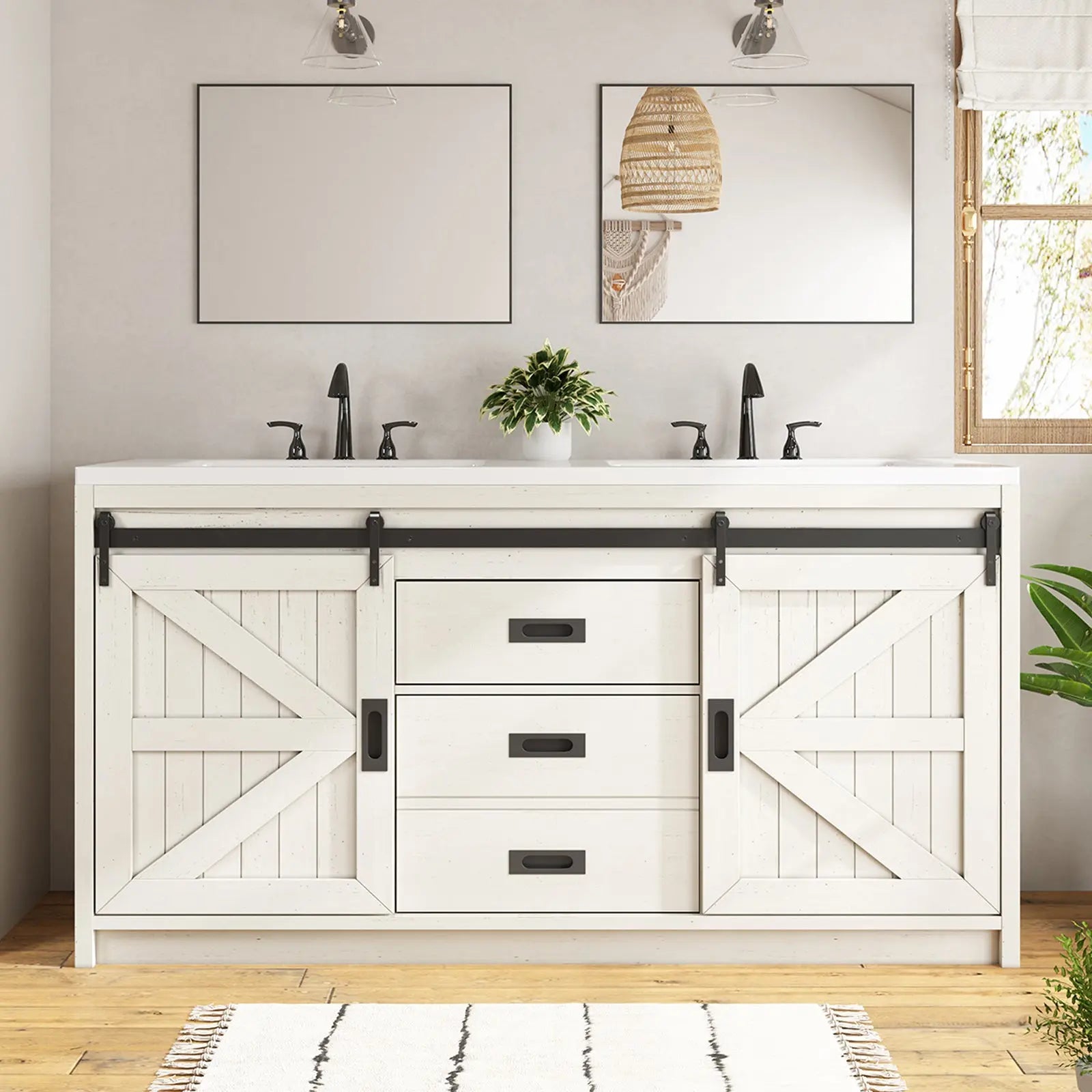
How do I choose between an apron sink and an undermount sink for my farmhouse vanity?
An apron front sink makes the strongest farmhouse statement and works best on wider vanities of 36 inches or more that are specifically built or adapted to accommodate the exposed front panel. Undermount sinks are more versatile, easier to install on existing or standard vanity bases, and suit both traditional and modern farmhouse styles equally. I’d choose an apron sink if authentic farmhouse character is your priority and your vanity configuration supports it, and an undermount sink if you want farmhouse style with broader design flexibility.
What paint finish holds up best on a bathroom vanity?
Semi-gloss and satin finishes both perform well in bathroom humidity and clean up easily without absorbing moisture the way flat or eggshell finishes do. I prefer satin for farmhouse vanities because it has just enough sheen to be practical without the high reflectivity of semi-gloss, which can look more commercial than handcrafted in appearance. Regardless of finish, always use a high-quality primer first, apply at least two thin coats rather than one thick one, and allow full cure time before returning the vanity to daily use.
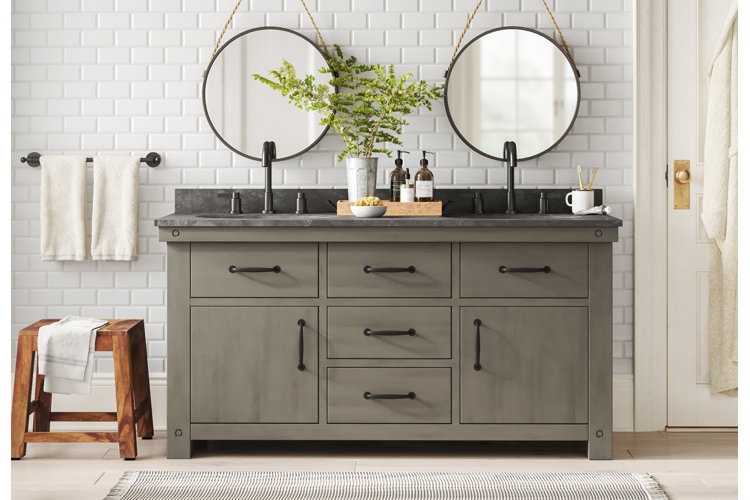
How much should a quality farmhouse bathroom vanity cost?
Ready-made farmhouse-style vanities from home improvement retailers start around $400 to $800 for a 36-inch single sink unit of reasonable quality. Mid-range furniture-style vanities with solid wood construction and better hardware run $900 to $1,800. Custom-built vanities from local cabinet makers start around $1,500 and scale with size and material choices. Converting antique furniture can cost $300 to $800 total including plumbing adaptation and materials. Factor in faucets, sink, countertop, and hardware separately, as these add $300 to $800 on top of the vanity base cost.
What hardware finish works best for a farmhouse bathroom vanity?
Oil-rubbed bronze and antique brass are my consistent top recommendations for farmhouse bathrooms. Both finishes carry warmth that aligns with the natural, handcrafted character of farmhouse design, and both age gracefully rather than simply wearing out over time. Matte black works beautifully in modern farmhouse interpretations where contrast and crispness are priorities. The most important rule is keeping all metal finishes consistent throughout the bathroom, including faucets, towel bars, light fixtures, and mirror frames, as mixing finishes creates visual tension that undermines even well-designed spaces.
Modern Farmhouse Bathrooms
/8605c84dd99c9e7560f57e4dbcdc415f-597f75fb396e5a001197cd62.jpg)
Recessed Shelves w/sliding mirror Modern farmhouse bathroom vanity

Modern Farmhouse Bathroom Vanity Design Ideas

Farmhouse Bathroom Decor Ideas

Magnificent Farmhouse Bathroom Remodel Decor Ideas

Brilliant Farmhouse Bathroom Vanity Remodel Ideas https://livingmarch.com/125

Related Posts:
- Silestone Bathroom Vanity Tops
- Bathroom Vanity And Mirror Combo
- Bathroom Vanity Designs Images
- How To Build A Bathroom Vanity With Drawers
- 30 Bathroom Vanity With Marble Top
- Black Marble Bathroom Vanity
- Bathroom Vanity 27 Inches Wide
- Traditional Bathroom Vanity Set
- Corner Bathroom Vanity With Vessel Sink
- Bathroom Vanity Height Code