I used to dread opening my bathroom cabinet. Products would tumble out, half-empty bottles would hide behind full ones, and the general chaos made my morning routine feel more stressful than it needed to be. When I finally committed to overhauling my bathroom storage properly, the transformation went far beyond tidiness. The whole room felt calmer, cleaner, and more intentional. That experience taught me that storage isn’t a background detail, it’s the foundation that every functional bathroom is built on.
Modern bathroom storage has evolved well past the basic medicine cabinet and under-sink cabinet combination that most homes default to. Today’s approach layers multiple storage types across vertical and horizontal space, combines open display with closed concealment, and treats organization as part of the overall design. The best modern storage solutions look intentional rather than utilitarian, which means the containers, shelves, and cabinets themselves contribute to the aesthetic rather than quietly undermining it with visual clutter of their own.

Floating vanities were my first major investment, and they immediately changed how the bathroom felt spatially. By raising the vanity off the floor and exposing the tile beneath it, the room reads as larger and more open than a floor-mounted cabinet creates. The drawer configuration I chose, three deep drawers on each side, holds far more than the two doors and one drawer of my old vanity while making everything accessible without crouching and reaching blindly toward the back of a dark cabinet. Drawers, I’ve concluded, beat doors for bathroom storage almost every single time.
Recessed shelving was a discovery that felt almost too good to be true when I first learned about it. By cutting between wall studs and installing a shallow niche, you gain several inches of storage depth without consuming any floor or wall projection space at all. My shower niche holds shampoo, conditioner, and body wash in a clean, built-in arrangement that replaced a cluttered shower caddy that kept rusting and falling at inconvenient moments. A recessed niche above the toilet holds rolled towels and a small plant, turning dead wall space into something genuinely useful and attractive.
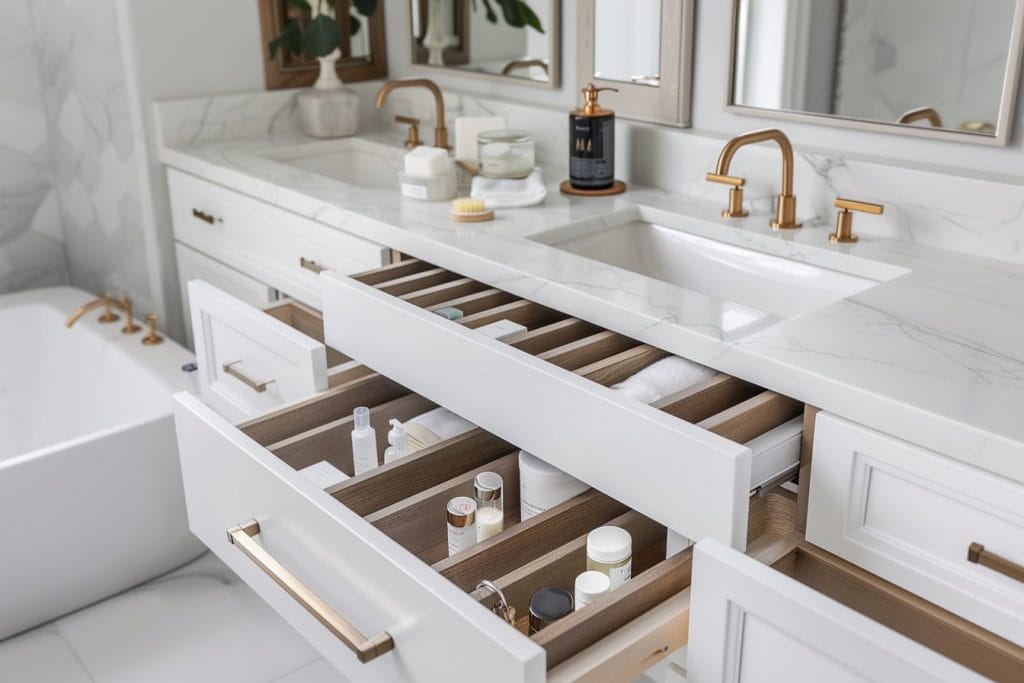
Vertical space is consistently underused in bathrooms, and I made a conscious effort to think upward rather than outward when planning my storage. A tall, slim linen tower cabinet beside my vanity reaches nearly to the ceiling and holds an impressive volume of towels, toiletries, and cleaning supplies behind clean closed doors. Ladder shelves leaning against walls work beautifully in larger bathrooms for open display storage. Even the space above the toilet, often left completely bare, accommodates a floating shelf or small cabinet that adds meaningful storage without crowding the room.
Open shelving taught me an important lesson about edited living. When everything is visible, you become much more selective about what you keep and how it’s arranged. I use matching glass containers for cotton balls, cotton swabs, and hair ties, which look intentional and make restocking easy at a glance. Rolled hand towels stacked in a small basket add texture and warmth. The discipline that open shelving demands actually improved my bathroom habits, because visual disorder on open shelves bothers me immediately in a way that hidden mess behind closed doors never quite did.

Under-sink space is genuinely underutilized in most bathrooms, including mine before I addressed it properly. A standard open cabinet beneath a sink becomes a jumbled pile of products within weeks without intentional organization. I installed a two-tier pull-out organizer that maximized the vertical space and made everything accessible without unpacking the whole cabinet to find what I needed. Tension rods mounted horizontally create a second level for hanging spray bottles, which frees the floor of the cabinet for larger items. These small interventions cost almost nothing and return enormous daily convenience.
Medicine cabinets experienced something of a design renaissance in recent years, and the modern versions are considerably more sophisticated than the mirrored boxes most of us grew up with. Frameless recessed medicine cabinets with interior lighting, adjustable shelving, and soft-close doors solve the mirror and storage problem simultaneously while maintaining a clean, minimal wall profile. I installed one beside my main mirror specifically for medications and daily-use items I want immediately accessible but not visible. The combination of a decorative mirror and a functional medicine cabinet nearby gives me the best of both purposes.

Hooks and rails are storage tools I undervalued for years before finally using them properly. A simple row of matte black hooks inside the bathroom door holds robes, towels, and bags without consuming any shelf or cabinet space. A towel rail on the back of the vanity door holds a hand towel within easy reach while keeping the towel bar on the wall free for display towels. These small additions don’t require renovation or significant investment, but they eliminate the low-level friction of things not having a consistent home, which compounds into real stress over the course of a week.
What I’ve come to understand about modern bathroom storage is that it rewards intentional thinking more than it rewards spending. The most effective storage systems I’ve created came from honestly mapping how I use the bathroom, what I reach for daily versus occasionally, and what genuinely needs to be visible versus what can live behind doors. Storage that matches your actual habits maintains itself almost automatically, while beautifully designed storage that ignores your real behavior becomes chaotic within days. Think honestly about how you live first, then invest in solutions that serve that reality directly.
What’s the most effective storage solution for a very small bathroom?
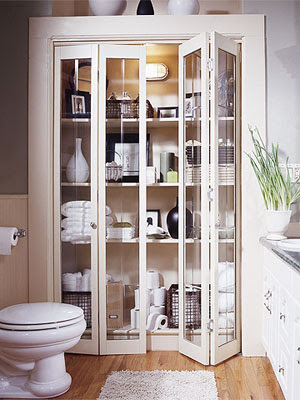
In small bathrooms, I prioritize vertical space above everything else. A tall narrow linen tower, recessed wall niches, floating shelves above the toilet, and over-door hooks all add meaningful storage without consuming precious floor space. Replacing a pedestal sink with a small floating vanity with drawers makes a dramatic storage difference in tight spaces. The goal is thinking in three dimensions rather than just the available floor area, which most small bathrooms have very little of to spare.
How do I keep open bathroom shelves from looking cluttered?
The discipline I follow is limiting open shelves to items that are either beautiful, frequently used, or both. Decanted products in matching containers look intentional where mismatched original packaging looks chaotic. I group items by category and use small trays or baskets to contain loose objects. Editing ruthlessly is the real answer, though. If something doesn’t earn its place visually on an open shelf, it belongs behind a closed door where its appearance doesn’t affect the overall look of the space.

Are floating vanities practical or do they just look good?
Both, in my experience. Floating vanities create visual spaciousness by exposing floor tile beneath them, and the drawer configurations available in modern floating designs are genuinely more functional than traditional floor-mounted cabinets with doors. The one practical consideration is installation, since floating vanities must anchor into wall studs to support weight safely. Properly installed, they’re extremely sturdy. The exposed floor also makes cleaning easier since there’s no base molding trapping dust and hair along the floor line.
How difficult is it to install a recessed shower niche yourself?
It’s manageable with basic tiling experience, but requires confidence with tile cutting and waterproofing. The niche must be cut between existing studs, properly waterproofed before tiling, and sloped slightly forward to prevent water pooling. I hired a tile contractor for mine because the shower waterproofing element felt too critical to risk getting wrong. For a dry-wall niche outside the shower, it’s considerably simpler and a confident DIYer can handle it comfortably with proper anchoring hardware and finish work.

What storage materials hold up best in a humid bathroom environment?
Solid wood with proper sealing, moisture-resistant MDF for painted applications, metal with rust-resistant finishes, and glass or ceramic containers all perform well with basic care. I avoid unfinished wood, untreated particleboard, and wicker baskets in areas with direct moisture exposure, as they deteriorate quickly and sometimes develop mold in poorly ventilated bathrooms. Keeping a bathroom exhaust fan running during and after showers extends the life of every material in the space significantly, regardless of the quality of what you’ve installed.
What’s a realistic budget for a complete bathroom storage overhaul?
It depends entirely on scope. Organizational accessories like drawer dividers, pull-out organizers, matching containers, and hooks can transform storage function for $100 to $300 total. Adding floating shelves and a linen tower runs $300 to $700 for quality pieces. A new floating vanity with drawers adds $500 to $1,500 depending on size and material. A full renovation including recessed niches, a medicine cabinet, and custom cabinetry can reach $3,000 to $6,000. I’d suggest starting with organizational improvements before committing to structural changes, since the results often surprise people.

Related Posts:
- Bathroom Storage Standing Rack
- Bathroom Storage For Hair Tools
- Bathroom Storage for Makeup
- Slim Bathroom Storage Cabinet Espresso
- White Bathroom Storage Caddy
- Bathroom Storage Next To Toilet
- Tall Slim Bathroom Storage Units
- White Rattan Bathroom Storage Units
- Maximize Bathroom Storage
- Vintage Bathroom Storage Cabinet