Before we installed our farmhouse double bathroom sink, mornings in our house were genuinely stressful. My partner and I were sharing a single basin, taking turns, bumping elbows, and silently negotiating mirror time like we were roommates rather than a couple who had chosen to share a life together. The upgrade to a double sink farmhouse vanity solved a daily friction point so completely that I still feel mild disbelief at how much calmer our mornings have become since making that single change.
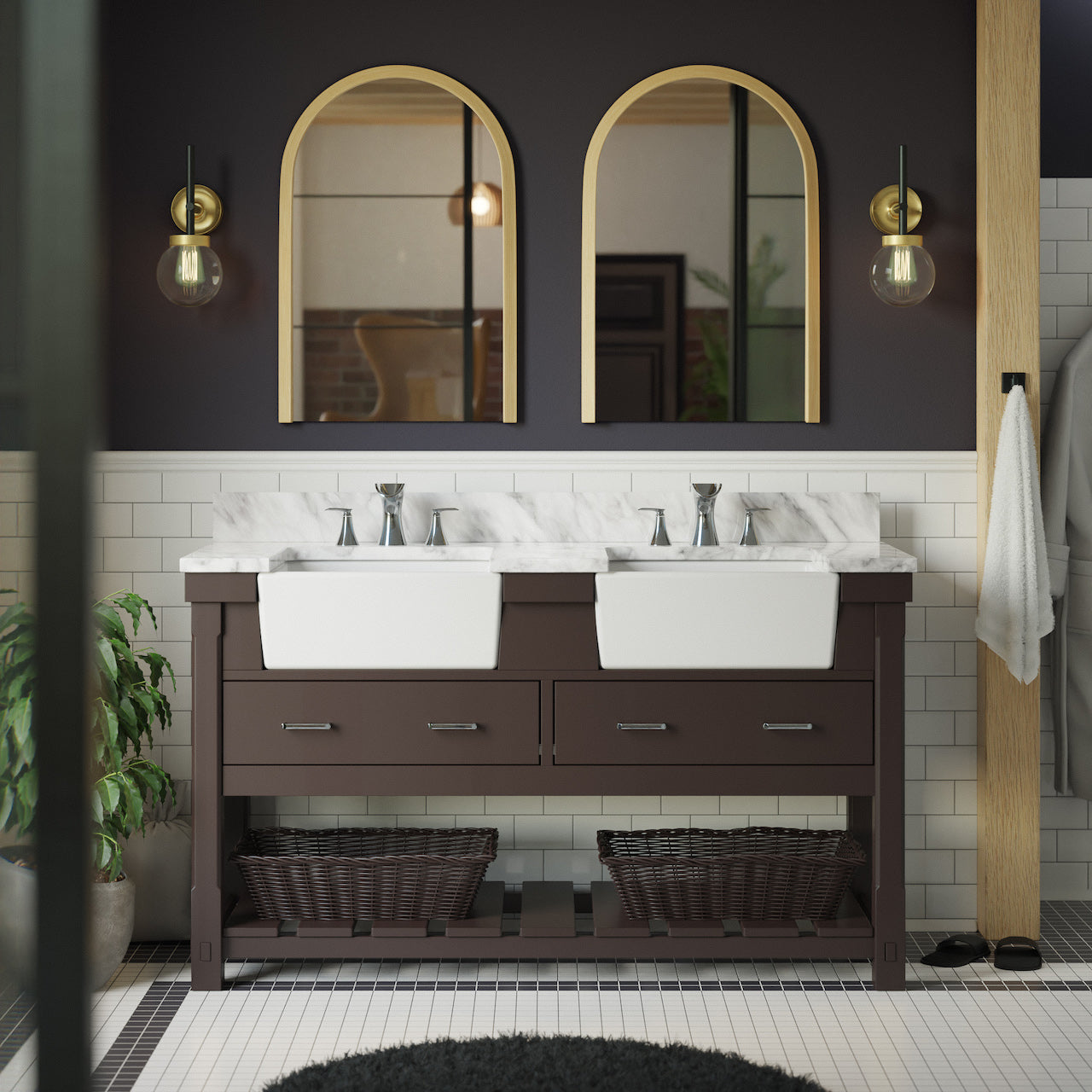
A farmhouse double sink isn’t just two basins side by side. The style carries specific design characteristics that set it apart from standard double vanities. Deep rectangular basins, furniture-style vanity bases with legs or paneled fronts, apron detailing, and natural materials like wood and stone define the aesthetic. The look is grounded and generous, like the sink was built to last generations rather than a few remodeling cycles. That sense of permanence and craftsmanship is exactly what drew me toward farmhouse style over any modern alternative I considered.
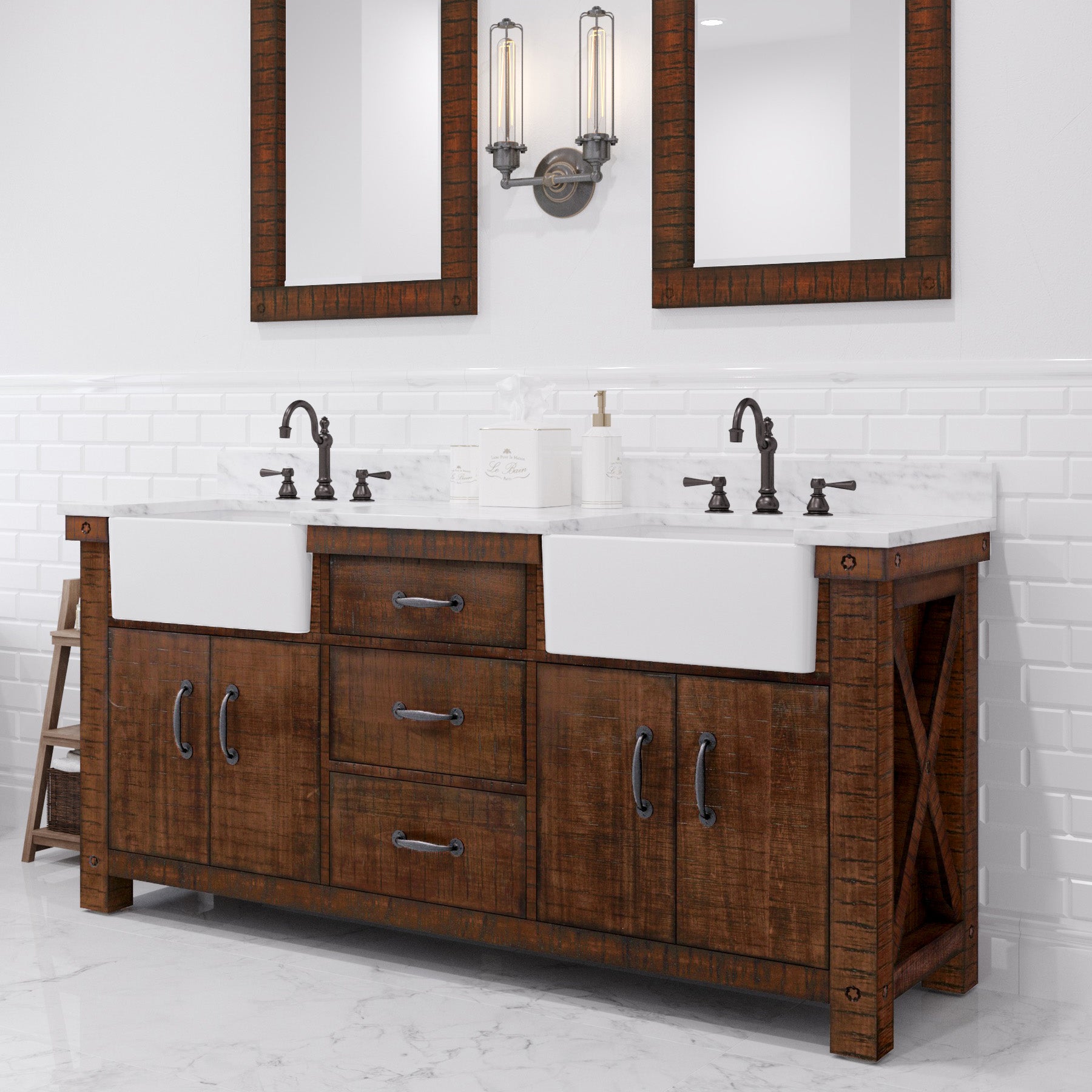
Choosing the basin material was my first major decision, and it took real research to feel confident. Fireclay is my personal top recommendation for farmhouse sinks. It’s made from ceramic clay fired at extremely high temperatures, which creates a dense, non-porous surface that resists staining, scratching, and chipping far better than standard ceramic. My fireclay double sink has been in daily use for three years and still looks as clean and white as the day we installed it. Cast iron with a porcelain enamel coating is another durable option, though it’s considerably heavier and requires reinforced cabinet support beneath it.
The vanity base matters just as much as the sink itself, and I learned that through one close call during shopping. I nearly purchased a beautiful double sink that came paired with a particleboard vanity cabinet. In a bathroom environment with daily moisture and humidity, particleboard deteriorates faster than almost any other material. I stepped back and invested in a solid wood vanity with a furniture-style design, raised panel doors, and a properly sealed finish. That decision added cost upfront but eliminated the replacement cycle that cheaper vanity bases inevitably create within a few short years.
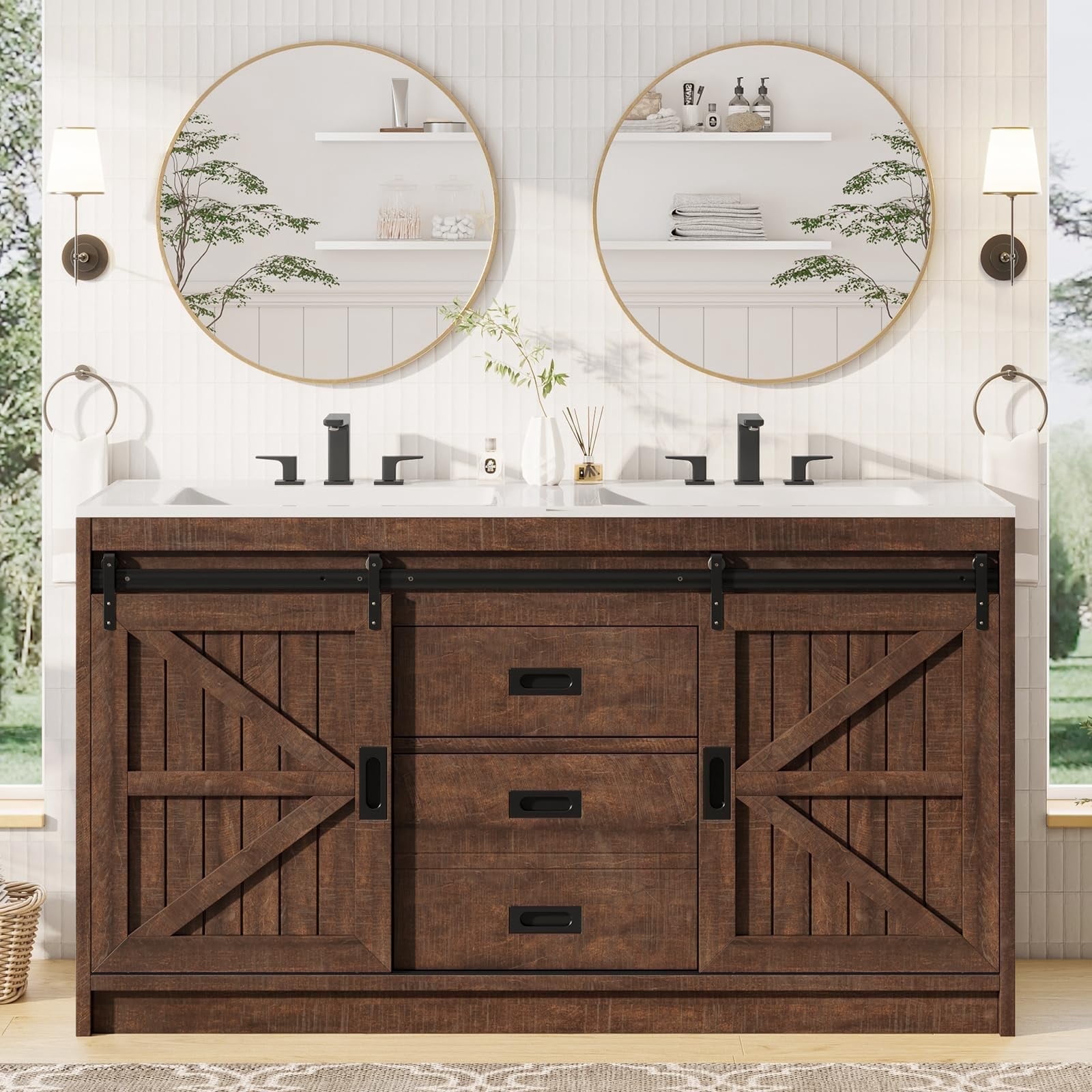
Faucet selection for a double sink vanity deserves its own focused attention. Each basin needs its own dedicated faucet, and matching them creates the cohesive look that makes a farmhouse vanity feel designed rather than assembled. I chose widespread faucets with cross handles in a brushed nickel finish, which complement the white fireclay beautifully without the fingerprint visibility that polished chrome creates. Bridge faucets are another wonderful farmhouse option if your basin configuration accommodates them. Keeping both faucets identical is a simple rule that pays significant visual dividends.
Counter space between and around the basins is something I wish I had thought about more carefully before finalizing my vanity dimensions. We have roughly eight inches between our two basins, which works but feels slightly tighter than ideal during busy mornings when products and cups and toothbrushes all need a temporary home. If your bathroom dimensions allow, a vanity that provides ten to twelve inches between basins and several inches of counter on the outer edges of each sink creates a genuinely comfortable workspace. Measure your available wall space generously and don’t sacrifice counter real estate for a vanity that looks proportionally elegant but functions awkwardly.

Plumbing a double sink was a project I decided to hire out rather than tackle myself, and I have no regrets about that choice. Running individual supply and drain lines for two basins in a bathroom that previously had one is a meaningful plumbing undertaking. My plumber completed the rough-in work in a single day, and his expertise navigating our older home’s pipe configuration was worth every dollar of his fee. If you’re converting from a single sink to a double, budget for professional plumbing alongside the vanity and sink costs. It’s a predictable line item that surprises people who skip it in their planning.
Lighting above a double vanity requires a different approach than lighting above a single sink. A single centered fixture creates uneven light that serves neither basin well. I installed two individual vintage-style sconces, one centered above each basin at eye level, which solved the problem completely. The side lighting hits both faces evenly and eliminates the unflattering shadows that overhead-only lighting creates. If sconces aren’t possible given your wall configuration, a long linear vanity light spanning the full width of the mirror provides a reasonable alternative, though flanking sconces remain my strong preference for quality of light.
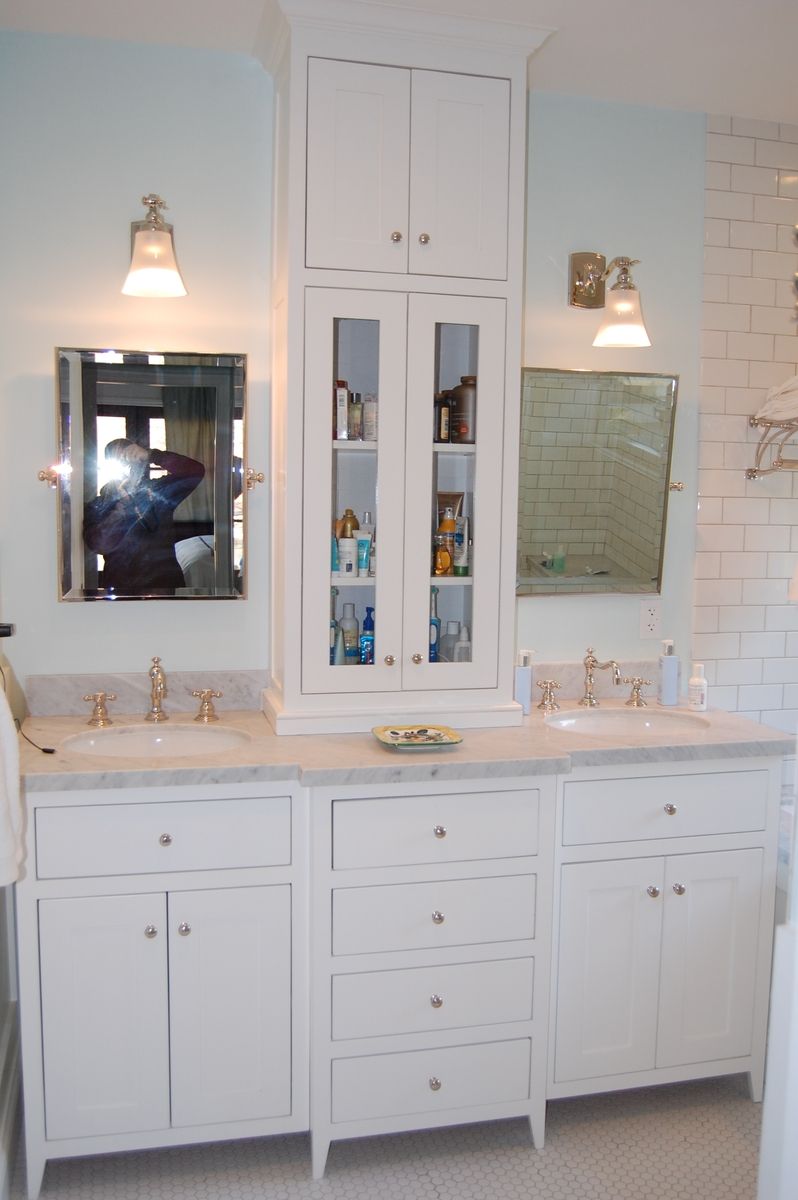
The farmhouse double sink has an unexpectedly positive effect on bathroom organization that I didn’t anticipate before installation. With two distinct basins, my partner and I naturally claimed our own sides, and with that territorial clarity came a spontaneous organization of products, drawer space, and cabinet sections. The chaos of a shared single sink space, where everything mixed together indiscriminately, gave way to two tidy, personal zones. Storage beneath each basin now holds only the items belonging to that person, which sounds simple but reduces the daily friction of searching through shared clutter more than I can adequately express.
If you’re weighing whether a farmhouse double bathroom sink is worth the investment, I’d encourage you to think about it in daily cost terms. Spread across years of calmer mornings, reduced household friction, and genuine design satisfaction every time you walk into your bathroom, the per-day cost becomes almost laughably small. Our bathroom is one of the most used rooms in our home, and making it function beautifully for two people simultaneously has improved our daily life in a quiet but consistent way. The farmhouse style layers beauty onto that function, which makes the whole investment feel not just practical, but genuinely joyful.

What’s the minimum vanity width needed for a farmhouse double sink?
From my experience and research, 60 inches is the practical minimum for a comfortable double sink vanity. This allows two basins of reasonable depth with adequate counter space between and beside them. Seventy-two inches is genuinely ideal if your bathroom accommodates it, providing generous counter space on all sides of both basins. I’d avoid trying to squeeze a double sink into anything narrower than 60 inches, as the result tends to feel cramped and becomes frustrating in daily use.
Is fireclay really worth the extra cost over standard ceramic?
In my experience, absolutely yes. Fireclay’s firing process creates a much denser, harder surface that resists the staining, scratching, and surface crazing that standard ceramic develops over years of use. My fireclay sink still looks pristine after three years of daily use from two people. The price difference is meaningful, typically several hundred dollars, but when you consider the lifespan and the daily satisfaction of a surface that cleans easily and maintains its appearance, the value is straightforward and genuine.
Do both faucets in a double sink need to be identical?
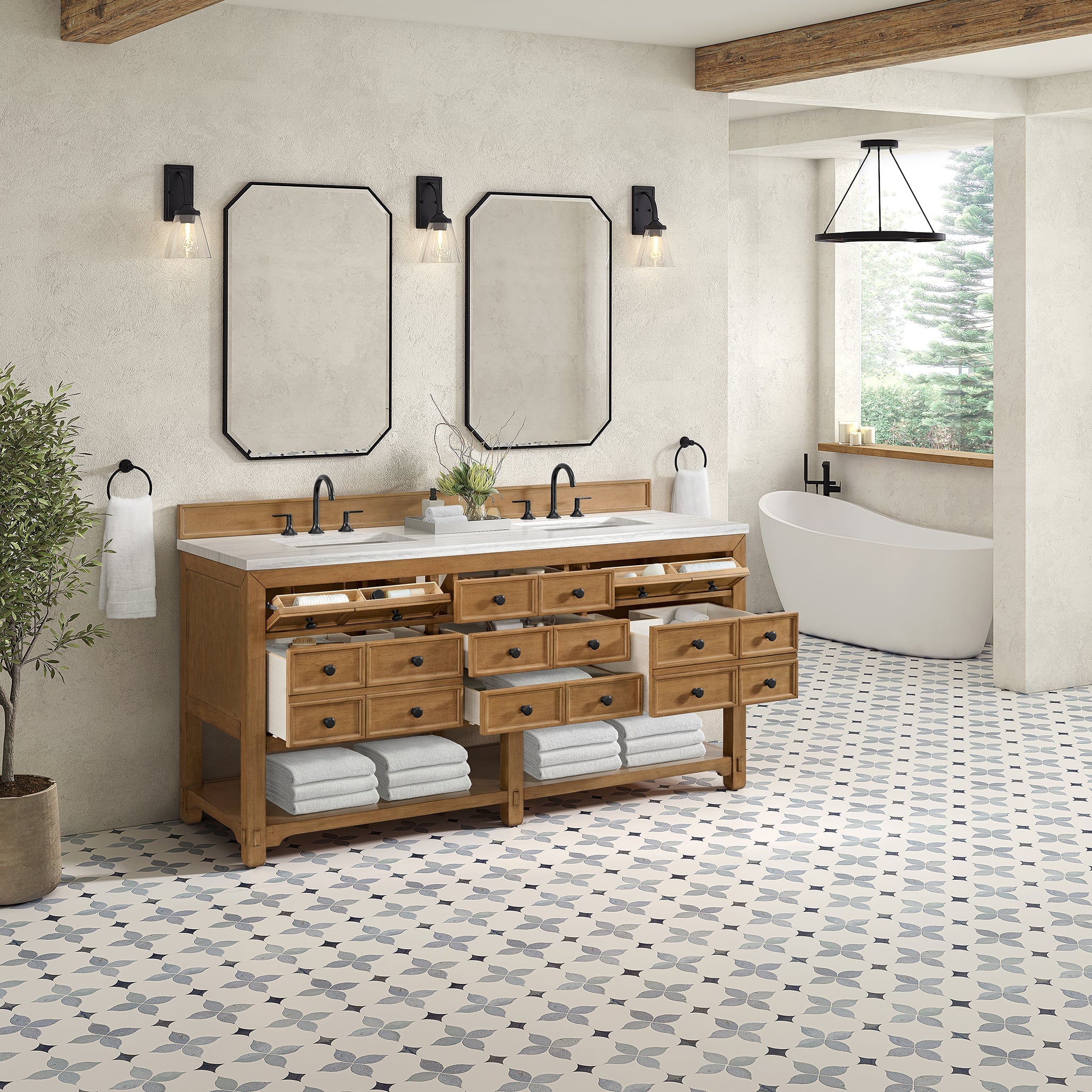
Technically no, but practically speaking, matching faucets create a cohesion that mismatched ones simply cannot. Identical faucets in the same finish signal that the vanity was thoughtfully designed rather than pieced together. I matched both finish and style exactly, and the visual result is clean and intentional. If budget is a constraint, at minimum keep the finish consistent even if the faucet style varies slightly. Mixing matte black with brushed nickel, for example, creates a visual tension that undermines the whole composition.
How difficult is it to convert from a single sink to a double sink?
The vanity swap itself is manageable, but the plumbing conversion is where professional help becomes genuinely worthwhile. Adding a second set of supply lines and a drain requires skill and familiarity with your home’s plumbing configuration. In my case, a licensed plumber handled it in one day with no issues. Attempting it without plumbing experience risks leaks inside the vanity cabinet that cause slow damage before you notice them. Budget for the plumber from the start and treat it as a fixed cost of the project rather than an optional upgrade.
What should I look for in a farmhouse vanity cabinet base?
Solid wood construction is my non-negotiable requirement after researching what fails first in bathroom vanities. Particleboard and MDF swell, warp, and deteriorate when exposed to the humidity and occasional moisture splashes that are unavoidable in daily bathroom use. Look for solid wood frames, properly sealed interiors, and soft-close door hardware that indicates attention to quality throughout construction. Furniture-style vanities with legs or raised panel doors in the farmhouse tradition tend to use better materials overall than flat-pack alternatives at similar price points.
How much should I budget for a complete farmhouse double sink installation?
A realistic budget for the complete project includes the vanity base, double sink, two faucets, a mirror or mirrors, hardware, and plumbing labor. Quality vanities with solid wood construction start around $800 to $1,200. Fireclay double sinks add $400 to $800. Two quality faucets run $150 to $300 each. Plumbing labor for a conversion typically runs $300 to $600 depending on your location and complexity. Budgeting $2,500 to $4,000 total covers a genuinely quality installation that will perform and look beautiful for many years.
- Antique Marble Bathroom Sinks
- Virtual Families 2 Bathroom Sink Is Leaking
- Free Standing Bathroom Sink Vanity
- Handicap Bathroom Sink Cabinets
- Clear Glass Vessel Bathroom Sink
- Tiny Bathroom Sink Ideas
- 20 X 17 Bathroom Sink
- Cleaning The Bathroom Sink Drain
- Oakley Bathroom Sink Backpack Stealth Black
- Cleaning Bathroom Sink Stopper