I’ve renovated three bathrooms over the years, and lighting was the element I consistently underestimated until it was too late to change without significant expense. My first two bathrooms had perfectly adequate fixtures that produced perfectly terrible light, the kind that makes you look exhausted at seven in the morning before the day has even started. When I tackled my farmhouse bathroom, I decided to treat lighting as the first decision rather than the last, and the results changed everything about how that room feels from the moment you flip the switch.
Rustic farmhouse bathroom lighting draws from a visual tradition rooted in the working structures of rural American life, barns, farmhouses, water towers, and industrial outbuildings where function shaped form and beauty emerged from that honest equation. Edison bulbs in cage-style sconces, mason jar pendants, barn-style flush mounts with black metal frames, and lantern-inspired wall lights are all expressions of this tradition. The common thread is visible hardware, warm light sources, and materials that look like they were built to last without any particular concern for looking delicate or refined.

My lighting plan started with a fundamental decision about fixture placement that I’d gotten wrong in previous renovations. A single overhead fixture, however beautiful, creates flat, unflattering light that casts shadows downward across the face and makes the vanity area frustrating for any grooming task. I committed to flanking wall sconces positioned at eye level on either side of the mirror, supplemented by a rustic flush mount ceiling fixture for general ambient light. That combination of task lighting at face level and ambient overhead light created a layered result that felt more like a thoughtfully designed room than a bathroom with adequate illumination.
The barn-style sconce became my signature farmhouse lighting choice, and I’ve recommended it to everyone who has asked me about bathroom lighting since. A good barn sconce features a simple half-dome metal shade, exposed hardware mounting, and either an oil-rubbed bronze or matte black finish that suits farmhouse aesthetics perfectly. Paired with a warm LED filament bulb in the 2200K to 2700K color temperature range, the light it produces has a quality that flatters the face, warms the room, and reinforces the rustic character of the surrounding design elements simultaneously. It’s a fixture that works at every level.
.jpg)
Bulb selection is something I feel strongly about in farmhouse bathrooms because the bulb is as visually important as the fixture itself. In cage-style sconces and mason jar pendants where the bulb is fully exposed, a visible filament LED bulb in a warm amber tint is essential for achieving the period character that makes farmhouse lighting so compelling. Standard frosted LED bulbs look completely wrong inside an exposed cage fixture, producing a flat, modern glow that undermines the entire aesthetic. I use 2200K filament bulbs throughout my farmhouse bathroom and the warm amber quality they produce is the single biggest contributor to the room’s overall atmosphere.
Color temperature deserves a dedicated explanation because it’s the technical concept that most directly affects how a room makes you feel. Measured in Kelvins, lower numbers produce warmer, more amber light while higher numbers produce cooler, bluer light. Most builder-grade bathroom fixtures default to 4000K or even 5000K, which is harsh, clinical, and deeply unflattering. For rustic farmhouse bathrooms, I stay strictly between 2200K and 2700K for all fixtures. The difference between a 2700K bathroom and a 4000K bathroom isn’t subtle, it’s the difference between a space that feels like a personal sanctuary and one that feels like a commercial restroom.

Mason jar pendant lights are a farmhouse lighting option I used in my larger bathroom where ceiling height allowed for a hanging fixture without creating a head clearance problem. The mason jar pendant references rural American domestic life so directly that it became almost cliché before quality designers started producing genuinely well-made versions that transcend the novelty. I chose a pendant with a wide-mouth quart jar, a matte black canopy and cord, and a warm filament bulb, and it functions as both practical lighting and a piece of genuine character above the freestanding tub. Pendants work best in bathrooms with eight-foot or higher ceilings where the fixture hangs comfortably above head height.
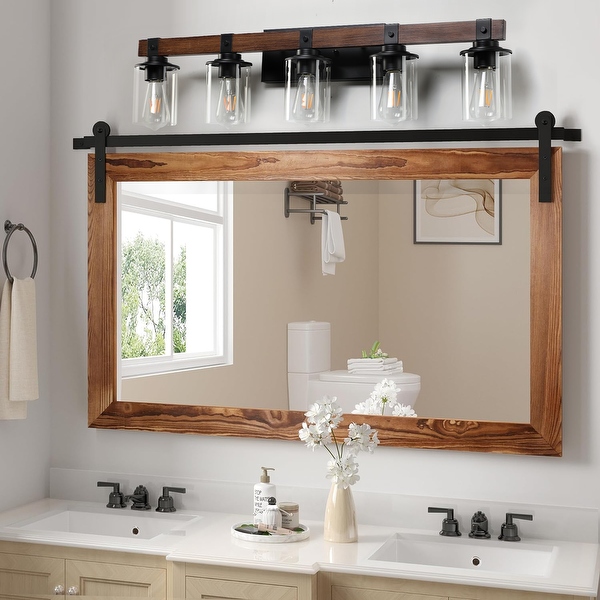
Reclaimed wood and metal combinations are a recurring theme in the best rustic farmhouse light fixtures I’ve encountered, and they add a material authenticity that purely metal fixtures sometimes lack. A vanity light bar with a reclaimed wood backplate and oil-rubbed bronze socket cups provides a surface texture and warmth that metal alone can’t produce. I’ve also seen beautiful custom sconces made from repurposed pipe fittings and salvaged wood that look genuinely handcrafted rather than factory reproduced. If you have any access to a local metalworker or a maker market in your area, commissioning a custom fixture is worth exploring because the results are consistently more interesting than anything mass-produced.

Dimmer switches are an investment I consider non-negotiable in any bathroom I design now, and the farmhouse bathroom especially benefits from the atmospheric range they provide. At full brightness during morning routines, the warm filament bulbs provide adequate task light. Dimmed to thirty or forty percent for an evening bath, the same fixtures produce something closer to candlelight, which is the ideal companion for a clawfoot tub and a long soak after a difficult day. Installing a dimmer compatible with your specific LED bulbs, since not all LED bulbs are dimmable, requires only checking compatibility before purchasing and costs almost nothing relative to the quality of life improvement it delivers consistently.
What I’ve come to understand about rustic farmhouse bathroom lighting after getting it genuinely right for the first time is that it operates on two levels simultaneously. Practically, it illuminates a functional space where people perform daily tasks that require adequate and flattering light. Atmospherically, it transforms that functional space into a room with a distinct character that reflects something personal and considered about the person who designed it. Those two functions don’t have to be in tension with each other, and rustic farmhouse lighting proves that point more convincingly than any other lighting style I’ve worked with. Get the warmth right, and everything else in the room responds accordingly.
Are rustic farmhouse light fixtures safe to use in a bathroom?
Yes, as long as you select fixtures with the appropriate moisture rating for their specific location. Fixtures used in general bathroom areas away from direct water contact should be rated damp location at minimum. Fixtures inside shower enclosures or directly above bathtubs require wet location ratings. I always check the fixture’s rating label before purchasing and verify it against the installation location. Reputable farmhouse lighting brands clearly specify ratings in their product descriptions, and choosing correctly rated fixtures is a non-negotiable safety requirement regardless of aesthetic preferences.
What wattage works best for farmhouse bathroom sconces?
For flanking vanity sconces, I find 40 to 60 watt equivalent LED filament bulbs provide excellent task lighting without harsh brightness. In actual wattage, quality LED filament bulbs achieve this output using only 5 to 8 watts, which keeps operating costs minimal. The color temperature matters more than wattage for atmosphere, so I prioritize 2200K to 2700K bulbs regardless of their wattage equivalent. For larger bathrooms where ambient ceiling fixtures supplement the sconces, a slightly higher output of 75 watt equivalent in the ceiling fixture balances the overall light distribution comfortably.

Can I install farmhouse bathroom sconces myself without an electrician?
Replacing an existing wall fixture with a new one of the same type is a manageable DIY project for someone comfortable with basic electrical work. Turn off the circuit breaker, remove the old fixture, connect the matching wires using the included hardware, and mount the new fixture. The process typically takes thirty to sixty minutes per fixture. If you’re adding new fixtures where no wiring exists, or working in a home with older wiring, hiring a licensed electrician is the genuinely safer choice. Never work on electrical components without confirming the power is completely off at the breaker panel first.
How do I choose between matte black and oil-rubbed bronze for farmhouse fixtures?
Both finishes suit rustic farmhouse bathrooms beautifully, and my choice usually depends on the other metal finishes already present in the space. Matte black creates stronger contrast against light walls and tile, reads as more contemporary within the farmhouse style, and hides fingerprints and water spots exceptionally well. Oil-rubbed bronze feels warmer, more historically rooted, and pairs naturally with wood tones and warm-colored tile. I match my fixture finish to my faucet finish as the primary coordination principle, then carry that finish through towel bars, cabinet hardware, and mirror frames for complete visual consistency.

What’s a reasonable budget for rustic farmhouse bathroom lighting?
Individual barn-style or cage sconces from quality manufacturers start around $40 to $80 each, with better-constructed pieces running $100 to $200 per fixture. A pair of vanity sconces plus a ceiling flush mount typically costs $200 to $600 total for mid-range quality. Mason jar pendants run $60 to $150 each for decent quality. Premium handcrafted or designer farmhouse fixtures reach $300 to $600 per piece. I spent approximately $320 on my complete bathroom lighting setup, two sconces and one ceiling flush mount, and consider it one of the highest-return investments in the entire renovation given its daily atmospheric impact.
Do LED filament bulbs really look like traditional Edison bulbs?
In my experience, quality LED filament bulbs are nearly indistinguishable from traditional incandescent Edison bulbs in visible appearance and light quality. The visible filament glows with the same warm amber character, and at 2200K the color temperature matches the warm incandescent output authentically. The practical advantages are significant: LED filaments use roughly 80 percent less electricity, generate far less heat, and last 15,000 to 25,000 hours compared to 1,000 hours for standard incandescents. I switched entirely to LED filament bulbs in all my farmhouse fixtures and have never felt I compromised on the authentic warm glow that makes farmhouse lighting so appealing.

Bathroom renovation designs, Modern farmhouse

Rustic Barn Bathroom Design Ideas
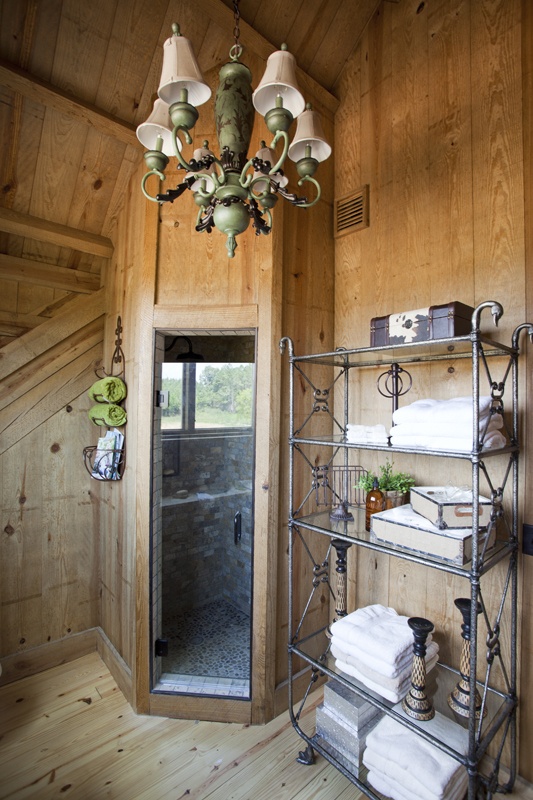
Trendy farmhouse lighting rustic – Ideas Bathroom farmhouse style

Related Posts:
- Bathroom Light Mirror Shaver Socket
- Ikea Bathroom Light Mirror
- Energy Efficient Bathroom Lighting Fixtures
- Bathroom Light Fixture Over Medicine Cabinet
- Bathroom Light Over Sink
- Ip65 Bathroom Lights
- Uv Bathroom Light
- Cape Cod Bathroom Lighting
- Polished Nickel Bathroom Light Fixtures
- Designer Bathroom Lighting Ideas