I had completely finished my farmhouse bathroom renovation, or so I thought, when I stood back and realized the wall above my vanity looked unresolved and somehow incomplete. The shiplap was perfect, the fixtures were coordinated, the lighting was warm and flattering, and yet something essential was missing. The moment I hung a reclaimed wood framed mirror above the sink, the room exhaled and settled into itself. That single piece connected every other element in the space in a way I hadn’t managed to achieve through months of careful planning and deliberate purchasing.
Farmhouse bathroom mirrors occupy a specific and genuinely important role in the overall design scheme. Unlike a purely decorative mirror in a living room or bedroom, a bathroom mirror performs constant daily work while simultaneously anchoring the visual composition of the most prominent wall in the room. In a farmhouse bathroom, the mirror needs to carry warmth, character, and a sense of handcrafted authenticity that purely functional frameless mirrors completely fail to deliver. The frame is where all of that character lives, and choosing the right frame material, finish, and proportion makes the difference between a mirror that merely reflects and one that genuinely contributes to the room.
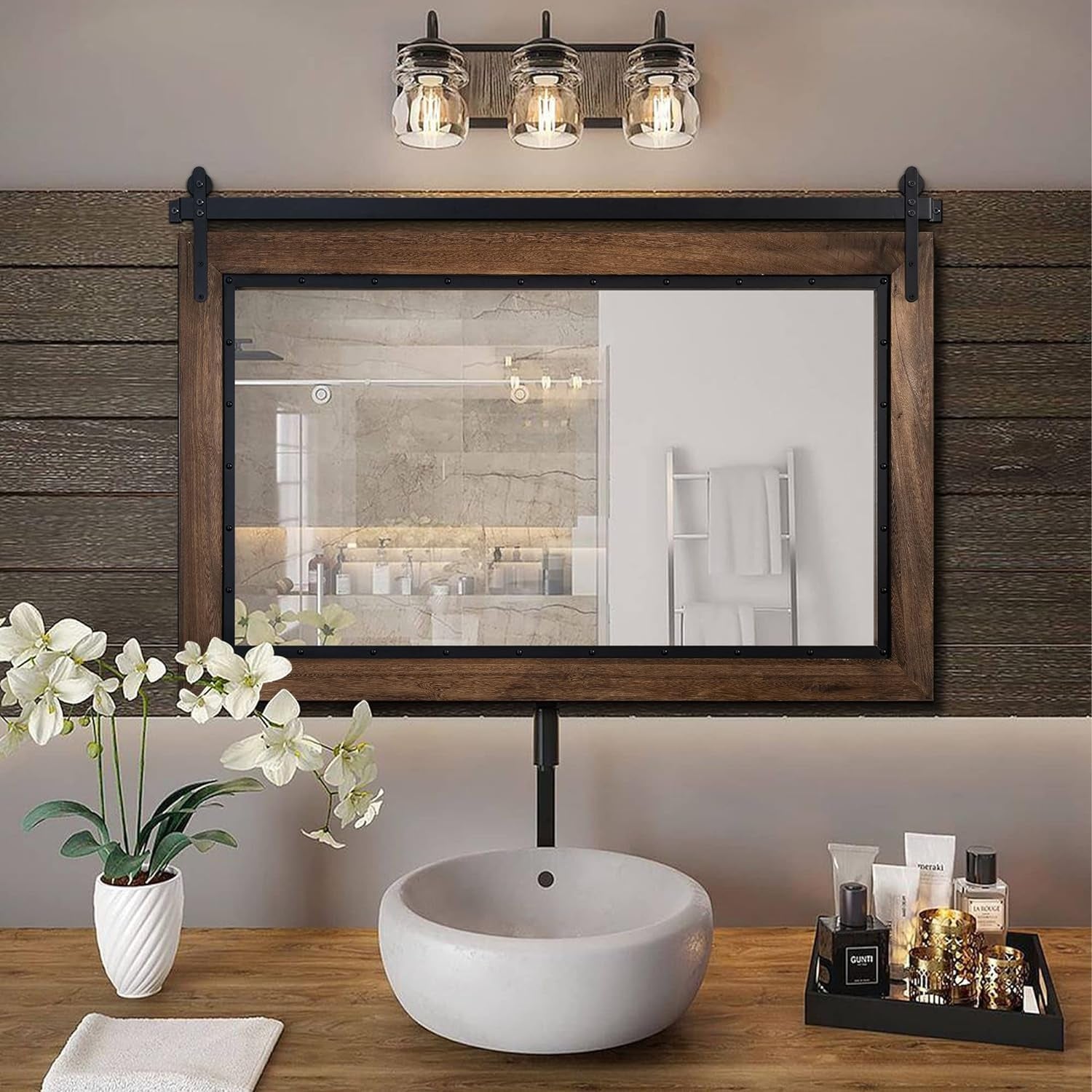
Reclaimed wood frames are my personal favorite for farmhouse mirrors, and I’d choose them again without hesitation. The irregular grain, the occasional nail hole, the color variation from decades of weathering, all of these qualities create a surface texture that manufactured wood simply cannot replicate convincingly. My mirror frame came from a supplier who uses genuine barn wood salvaged from structures in the rural Midwest, and the history embedded in that material is palpable in a way that adds something to the bathroom beyond pure aesthetics. Every morning I see it and feel the room is connected to something larger and older than a recent renovation.
Beyond reclaimed wood, several other frame materials suit farmhouse mirrors beautifully and offer different personality expressions within the style. Whitewashed or painted wood frames in cream or soft white read as clean farmhouse without the raw character of reclaimed material. Black metal frames with simple geometric profiles suit modern farmhouse interpretations where contrast and crispness define the aesthetic. Rope-wrapped frames reference coastal farmhouse styling with a natural texture that works well alongside white tile and light wood tones. Wrought iron frames with simple forged details suit more traditional rural aesthetics with an authenticity that cast or stamped metal alternatives can’t match.
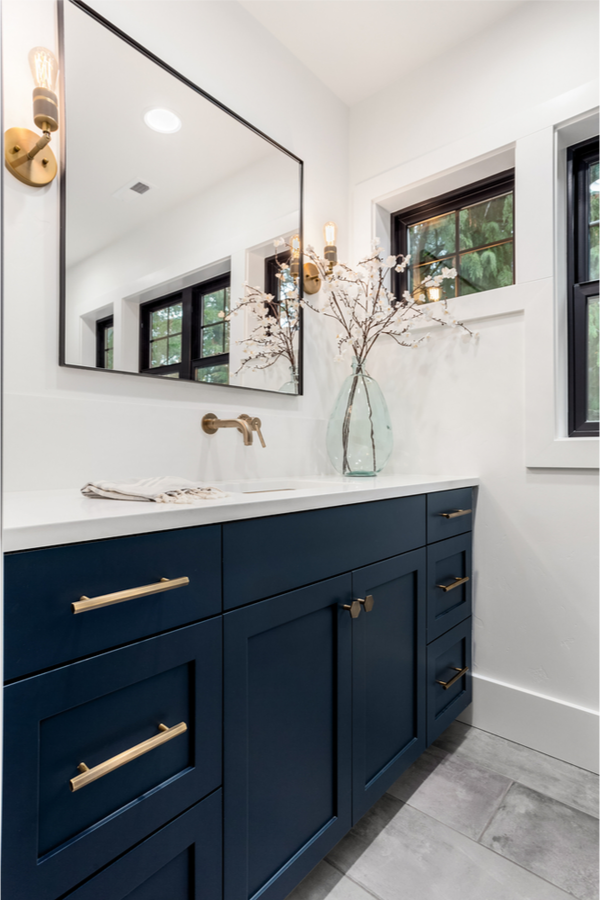
Size and proportion are decisions I approach with a paper template method that has saved me from multiple costly mistakes across several renovations. Before committing to any mirror purchase, I cut kraft paper to the exact dimensions of the mirror I’m considering and tape it to the wall in the intended position. This simple test reveals whether the proportions work in actual space rather than in imagination or on a screen. For farmhouse vanity mirrors, I generally keep the mirror width within two to four inches narrower than the vanity below it, which creates a visually grounded composition rather than the floating, mismatched feeling that an oversized or undersized mirror produces above a sink.
Shape is another dimension of mirror selection that affects the farmhouse aesthetic significantly. Rectangular mirrors with horizontal orientation suit double vanities and wider single vanities by echoing the horizontal emphasis of the sink and countertop below. Arched mirrors with a rounded top introduce a softness and architectural reference that suits farmhouse bathrooms with shiplap or beadboard walls particularly well. Square mirrors work beautifully above smaller vanities where a horizontal rectangle would feel squat and proportionally awkward. I chose an arched rectangular mirror for my bathroom because the arch detail references the vintage barn windows that partly inspired the overall farmhouse direction of the room.
/69a2a4bfef3f5770e6a61bb623780761-597f67280d327a00119a9d19.jpg)
The relationship between the mirror frame finish and the other metal finishes in the bathroom is a coordination principle I treat as non-negotiable. My reclaimed wood mirror has simple black metal corner brackets that tie directly to my matte black faucet, light fixture, and cabinet hardware. That finish repetition across multiple elements creates a visual rhythm that makes the room feel designed with intention. If your mirror frame is purely wood with no metal elements, matching the wood tone to your vanity wood creates a different but equally effective kind of cohesion that reads as warm and considered throughout the space.
Practical hanging considerations for farmhouse mirrors deserve serious attention because these frames are often heavier than they appear. My reclaimed wood mirror weighs significantly more than a frameless mirror of the same size, and I installed it using a French cleat system that distributes the weight across a wide wall section rather than concentrating it on two anchor points. French cleats are simple to install, extremely secure, and allow easy leveling adjustment, which matters more than most people realize when you’re staring at a bathroom mirror every morning and even a slight tilt becomes impossible to ignore after the first week of noticing it.

Mirrors with built-in storage, the farmhouse medicine cabinet category, represent an alternative worth serious consideration for anyone whose bathroom storage is genuinely stretched thin. Reclaimed wood medicine cabinets with mirrored doors and interior shelving solve the mirror and storage problems simultaneously without adding two separate pieces to the wall. I’ve installed one in a smaller guest bathroom and the single piece approach created a cleaner, less cluttered wall composition than a separate mirror and separate cabinet would have produced. The farmhouse medicine cabinet with a beveled mirror door and wood frame reads as a furniture piece rather than a utilitarian box, which keeps the aesthetic integrity fully intact.
Living with my farmhouse mirror for two years has confirmed everything I hoped it would deliver and added something I hadn’t anticipated. The reclaimed wood frame has become one of those details in my home that I genuinely love noticing rather than simply accepting. Visitors consistently mention it as the element that makes the bathroom feel special, and I understand why because it carries a quality of realness that manufactured finishes and standard fixtures don’t possess. Choosing a farmhouse mirror with genuine character rather than settling for adequate function was one of the best decisions I made in the entire renovation, and its daily contribution to my experience of the space has never once diminished or felt ordinary.
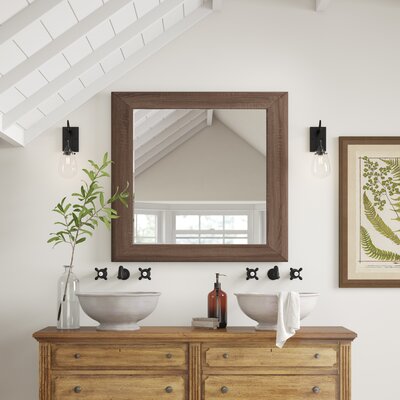
How do I hang a heavy reclaimed wood mirror safely?
A French cleat system is my strong recommendation for any mirror heavier than fifteen pounds. Two interlocking beveled boards, one mounted to the wall anchored into studs and one attached to the mirror back, distribute weight across a wide surface and allow easy leveling adjustment. For mirrors under fifteen pounds, picture rail hooks rated above the actual weight work well. I always locate studs with a finder tool before hanging anything substantial and never rely solely on drywall anchors for heavy pieces that will hang permanently in a frequently used bathroom space.
What size farmhouse mirror works above a single sink vanity?
For a standard 30 to 36-inch single sink vanity, I find mirrors between 24 and 32 inches wide work proportionally well. The mirror should be narrower than the vanity by at least two inches on each side to create visual breathing room rather than an edge-to-edge stacked appearance. Height varies more with personal preference and wall space, but 30 to 36 inches tall suits most single vanity applications comfortably. Always cut a paper template and tape it to your actual wall before ordering, because product photos rarely communicate true scale accurately enough to rely on without verification.

Does a reclaimed wood frame require special treatment in a humid bathroom?
Properly sealed reclaimed wood performs reliably in bathroom humidity without special ongoing maintenance beyond normal care. I apply a penetrating wood sealer to all surfaces of the frame before installation, including the back panel, and reapply to exposed surfaces annually. Running an exhaust fan during and after showers manages ambient humidity and significantly extends the life of all wood elements in the bathroom. Avoid hanging reclaimed wood mirrors directly against exterior walls where temperature differentials encourage condensation that gradually compromises even well-sealed wood surfaces.
Can a farmhouse mirror work in a non-farmhouse bathroom?
Absolutely, and some of the most interesting bathroom designs I’ve seen mix a farmhouse mirror with otherwise contemporary or transitional surroundings. A reclaimed wood framed mirror above a modern floating vanity creates an appealing tension between the organic and the architectural that feels deliberately layered rather than stylistically confused. The key is maintaining finish continuity between the mirror frame and at least one other element in the room, whether that’s a wood countertop, a wood shelf, or metal hardware in a coordinating tone, so the mirror reads as an intentional choice rather than a random addition.
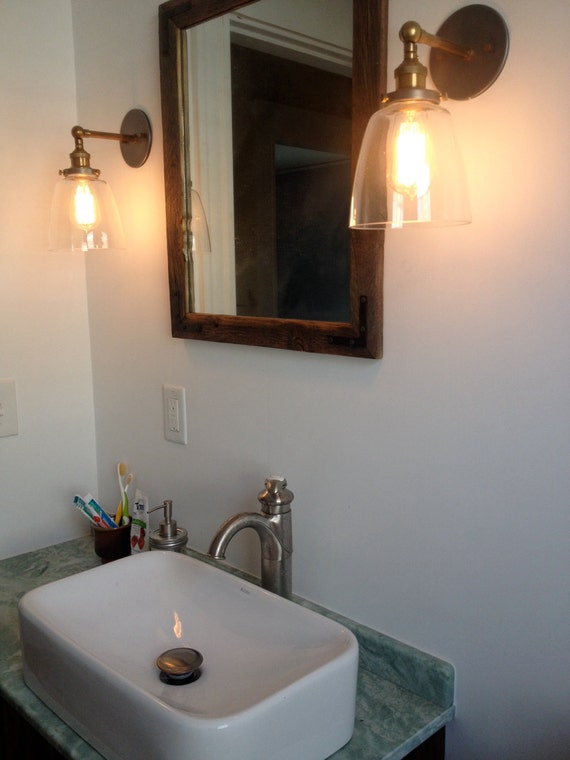
What’s a fair price range for a quality farmhouse bathroom mirror?
Ready-made farmhouse mirrors with wood frames from home goods retailers start around $80 to $150 for smaller sizes in 24 to 30-inch widths. Mid-range quality pieces with genuine wood construction and better frame detailing run $150 to $350. Genuine reclaimed wood mirrors from specialty suppliers or artisan makers typically start around $200 and reach $500 or more for larger or particularly characterful pieces. Custom-built mirrors from local woodworkers start around $250 and scale with size and wood material. I paid $285 for my reclaimed wood mirror and consider it excellent value given the daily visual satisfaction it consistently provides.
How do I clean a farmhouse mirror without damaging the wood frame?
I keep glass cleaning and frame care completely separate, which is the most important habit for protecting a wood-framed mirror long-term. For the mirror glass, I spray diluted white vinegar onto a microfiber cloth first, never directly onto the glass where it can run behind the frame and cause moisture damage to the wood. For the wood frame, a dry microfiber cloth handles dust and light marks without introducing moisture. For stubborn marks on sealed wood, a barely damp cloth followed immediately by a dry one works safely. I reapply wood sealer to the frame annually as preventive maintenance that takes about ten minutes total.

FARMHOUSE BATHROOM MIRROR DESIGN IDEAS AND DECOR

WHITEWASH Wood Mirror Wood Frame Mirror Rustic Wood Mirror Etsy
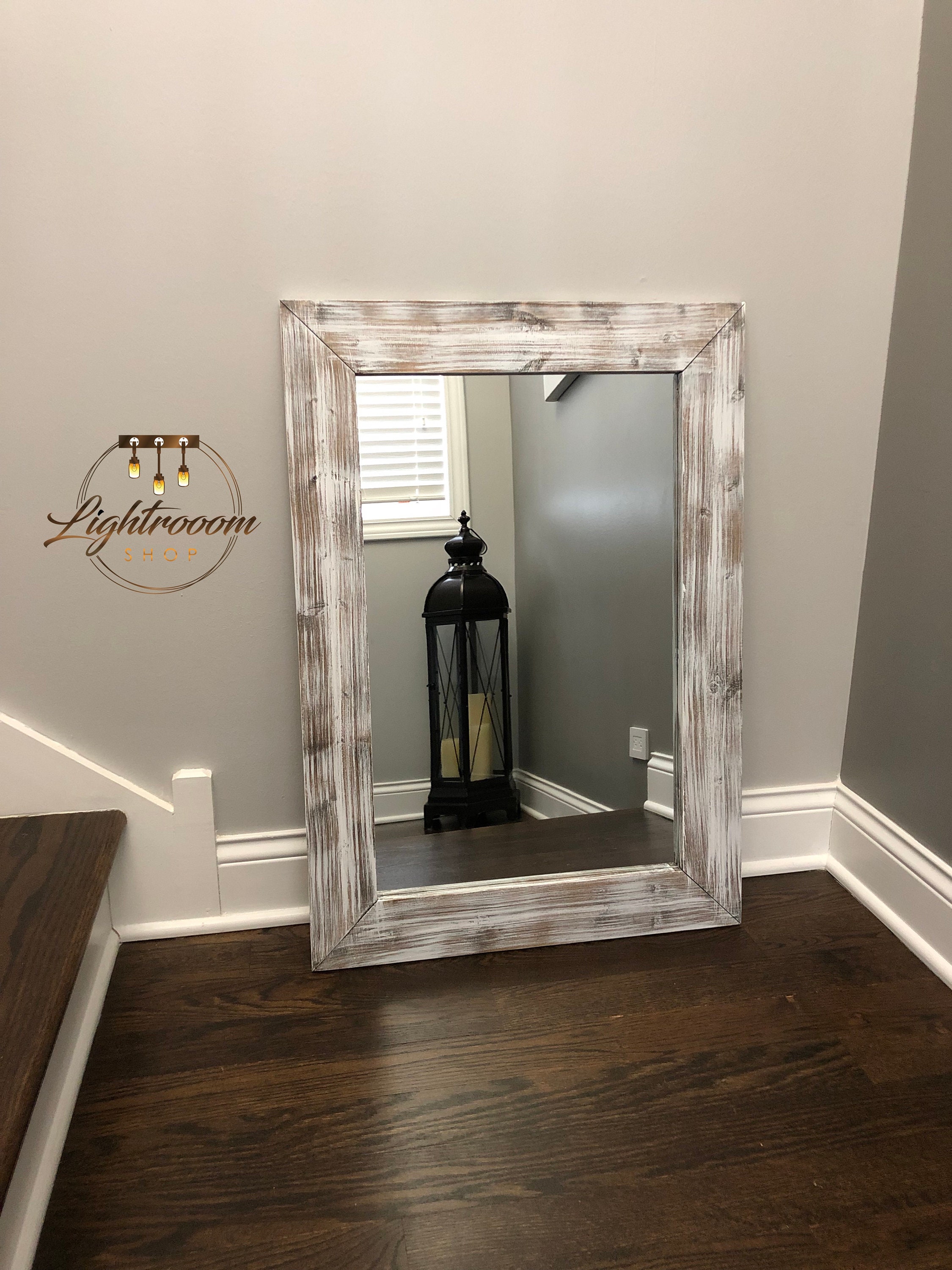
on Farmhouse bathrooms Farmhouse bathroom, Framed bathroom mirror, Bathroom

Related Posts:
- Large Bathroom Mirrors With Frames
- 60 Framed Bathroom Mirror
- Chrome Oval Bathroom Mirrors
- Bathroom Mirror 48 X 30
- Bathroom Mirror Cupboard
- Bathroom Mirror With Clock And Radio
- Led Illuminated Bathroom Mirror Cabinet
- Victoria Plumb Bathroom Mirrors
- Bathroom Mirror And Storage
- Bathroom Mirrors Oval Brushed Nickel