My bathroom had adequate storage and zero personality for the first four years I lived in my house. The under-sink cabinet held everything necessary, and nothing on display said anything about the person who used the space every single day. Then I installed a pair of retro-style bracket shelves above the toilet, arranged a small collection of vintage apothecary jars and rolled towels on them, and stepped back to find a room that had acquired an entirely new quality, something warm and personal and genuinely inviting that purely functional storage had never once provided.
Retro bathroom shelves sit at the intersection of storage and display in a way that modern floating shelves often miss. A contemporary floating shelf is essentially invisible until something is placed on it. A retro shelf announces itself through its bracket design, its material, its finish, and the period reference it carries before a single object is placed on its surface. Cast iron scroll brackets, turned wood supports, ornate porcelain bracket caps, and industrial pipe shelf hardware all carry specific historical references that contribute to the overall character of the space as independent design elements rather than purely functional components.
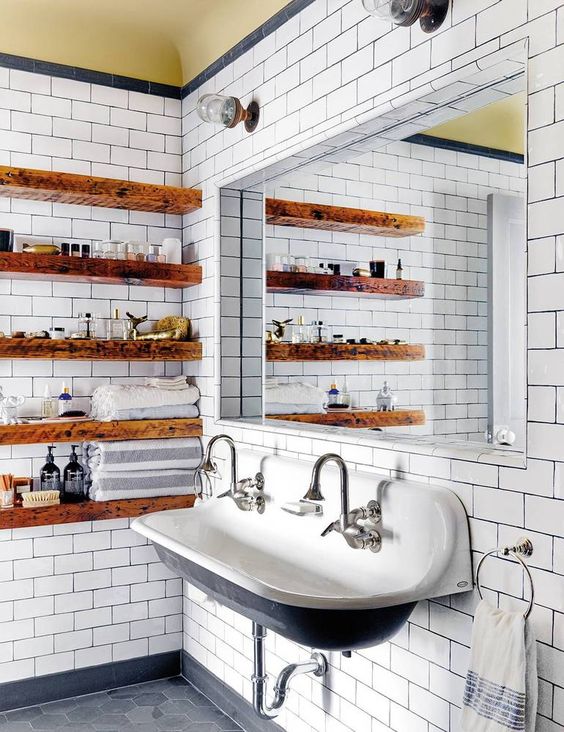
The era your retro shelves reference shapes every detail from bracket style to shelf material to finish color. Victorian-inspired shelves suit ornate cast iron brackets with scroll and floral details, marble or white painted wood shelf boards, and finishes in oil-rubbed bronze or antique black. Mid-century shelves favor cleaner lines, teak or walnut shelf boards, and simple brass or chrome bracket hardware that lets the wood grain take prominence. Industrial vintage shelves use black pipe hardware, reclaimed wood planks, and raw metal finishes that reference early 20th century factory and warehouse aesthetics with appealing directness and honesty.
My own shelves follow an early 20th century industrial aesthetic that suits the overall character of my bathroom, which has black and white hex tile, a pedestal sink, and vintage-style lighting with exposed Edison bulbs. I chose raw black pipe brackets with reclaimed pine shelf boards finished in a dark walnut stain, and the combination felt immediately right in the space. The pipe hardware references plumbing infrastructure in a way that’s appropriately self-aware for a bathroom, and the reclaimed pine brings warmth and grain character that pure metal shelving would have lacked entirely in a room that already has significant hard surface presence.
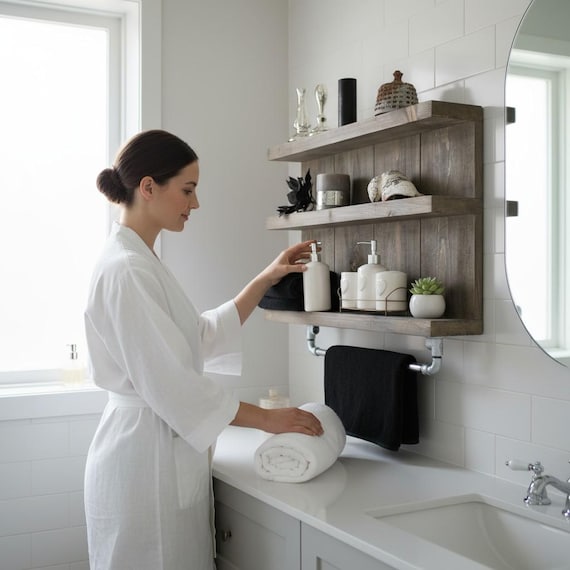
Shelf board material is a decision that carries both aesthetic and practical implications in a bathroom environment where humidity is a constant factor. Solid wood shelf boards in pine, oak, or walnut are my preference for retro shelves because they carry the character and warmth that engineered materials can’t replicate convincingly. Proper sealing before installation is essential, and I apply two coats of a moisture-resistant finish to all surfaces including the underside and back edge before the shelf goes anywhere near a bathroom wall. Marble shelf boards suit Victorian-inspired shelf designs with an authenticity and elegance that suits formal period aesthetics beautifully, though they require more careful handling during installation due to their weight.
Bracket hardware is where retro shelf styling concentrates most of its visual personality, and choosing the right bracket for your intended aesthetic is more important than any other single decision in the shelf selection process. I spent considerable time looking at cast iron scroll brackets, decorative porcelain-tipped brackets, and simple iron angle brackets before committing to pipe hardware for my specific bathroom. Each bracket type communicates a different historical period and emotional temperature. Ornate scroll brackets feel Victorian and romantic. Clean angle brackets with a bronze finish feel mid-century and restrained. Pipe hardware feels industrial and unpretentious. The bracket you choose sets the aesthetic direction that everything displayed on the shelf subsequently responds to.

What you display on retro bathroom shelves matters as much as the shelf itself, and I’ve learned through trial and error that editing carefully produces better results than filling every inch of available surface. My shelves hold vintage amber glass apothecary jars in three graduated sizes, a small potted succulent, a stack of rolled linen hand towels, and a single antique cast iron soap dish that I found at an estate sale for three dollars. Every item on the shelf is either beautiful, useful, or both, and nothing is there simply because I had it available and the shelf had empty space. That discipline creates a display that reads as curated rather than cluttered.
Over-toilet placement is where retro bathroom shelves deliver the most impactful return on investment relative to the space they occupy. The wall above a toilet is consistently the most underutilized vertical surface in any bathroom, and a pair of retro shelves transforms it from dead wall space into a functional storage and display zone that also serves as a visual focal point. I mounted my pipe shelves at heights that allow comfortable access to the lower shelf while keeping the upper shelf within reach without straining. The visual composition they create above the toilet turned what was previously a blank, forgettable wall section into one of my favorite details in the entire bathroom.

Installation is more straightforward than most people fear, but locating wall studs and using appropriate anchors for the shelf’s intended load is genuinely important for safety and long-term stability. I use a stud finder before any shelf installation and anchor directly into studs whenever the shelf position allows it. When studs aren’t available at the needed position, toggle bolts rated well above the anticipated load provide reliable holding strength in drywall. I always hang an empty shelf first, verify its stability by applying downward pressure at the outer edge, and only then begin arranging items on the surface. A shelf that shifts or tilts under load needs reinstallation before anything is placed on it permanently.
Two years after installing my retro bathroom shelves, they remain one of the most satisfying additions I’ve made to my home at any price point. The combination of practical storage, curated display, and period character they contribute to the bathroom operates daily in a way that purely decorative choices don’t. Every morning I see the amber jars catching the Edison bulb light and the linen towels rolled neatly on the lower shelf, and the room feels genuinely personal rather than generically decorated. That quality of personalness, a space that feels like it was assembled by someone specific with actual preferences and a real sense of history, is what retro shelves deliver better than almost any other single bathroom addition I’ve experienced.

How much weight can retro bathroom shelves safely hold?
Weight capacity depends entirely on bracket construction, shelf board thickness, and anchoring method. Cast iron and steel pipe brackets anchored into wall studs with appropriate lag screws typically support 30 to 50 pounds per shelf comfortably. Decorative brackets in lighter materials with drywall anchors safely hold 15 to 25 pounds depending on anchor rating. I always check the bracket manufacturer’s specified load rating before purchasing and anchor into studs whenever possible. For shelves holding heavy items like glass jars or ceramic accessories, I err toward stud anchoring without exception regardless of how secure drywall anchors feel initially.
What finish holds up best on metal shelf brackets in a humid bathroom?
Powder-coated finishes and oil-rubbed bronze PVD coatings both perform reliably in bathroom humidity. Powder coating creates a durable, chip-resistant surface that resists moisture without ongoing maintenance beyond occasional wiping. Oil-rubbed bronze PVD bonds at a molecular level and develops a richer character over time rather than simply degrading. Raw iron brackets develop a patina that some people find appealing and others find concerning, so seal them with a clear protective coating before installation if you want to control the aging process. I prefer powder-coated matte black for pipe hardware and PVD bronze for decorative cast iron brackets.
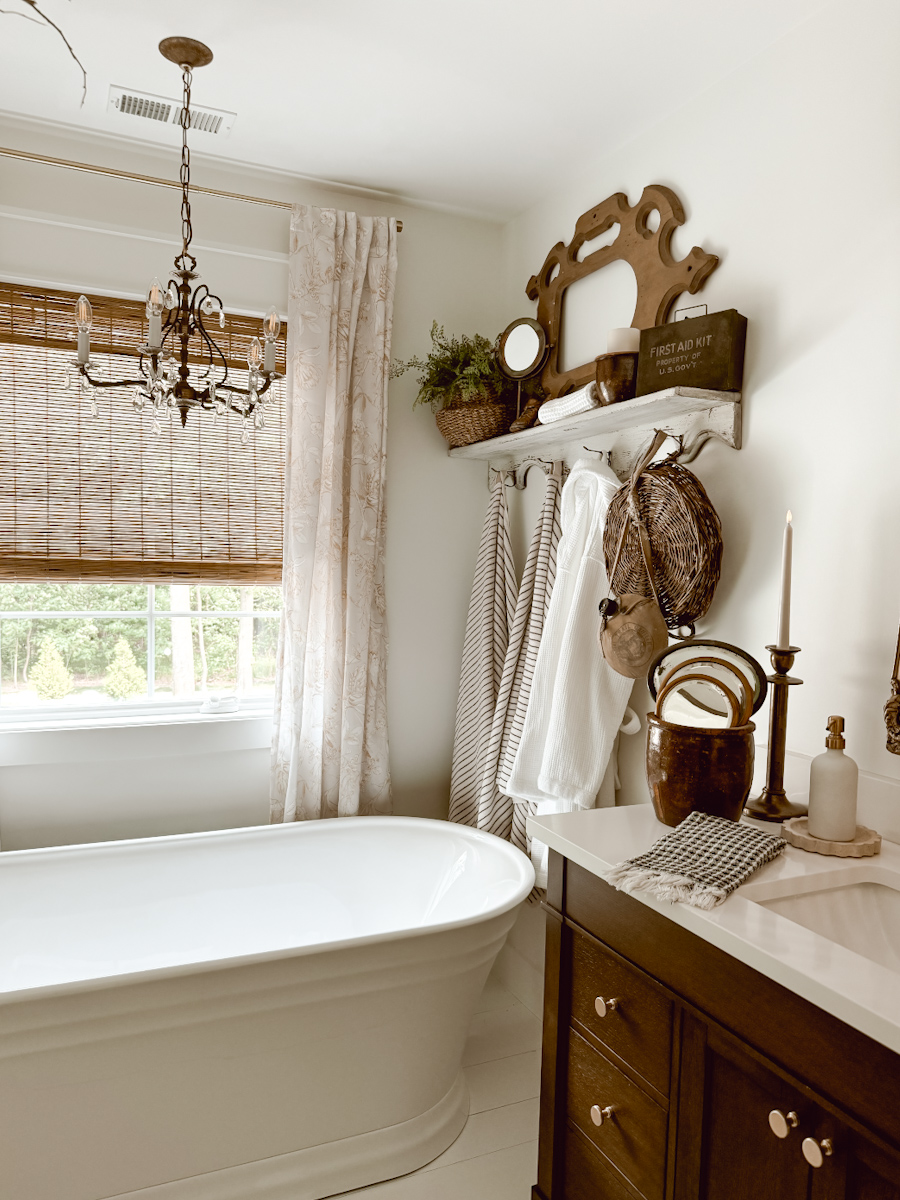
Can I install retro bathroom shelves myself without professional help?
Yes, shelf installation is one of the most approachable DIY bathroom projects available. The basic process involves locating studs, marking bracket positions at the correct height and level, drilling pilot holes, and securing brackets with appropriate hardware. A stud finder, level, drill, and the correct anchoring hardware are the only tools required beyond the shelf components themselves. The step that trips up most beginners is ensuring both brackets are perfectly level with each other before final tightening, so I measure from the floor to each bracket position independently and double-check with a spirit level placed across both brackets before committing.
How do I style retro bathroom shelves without making them look cluttered?
The editing principle I follow is allowing no item on the shelf unless it’s beautiful, functional, or both. I group items in odd numbers, typically three or five objects per shelf, which creates a more visually dynamic arrangement than even-numbered groupings. Vary object heights within each group to create visual movement. Use matching or coordinating containers rather than displaying original product packaging. Leave deliberate empty space on at least one portion of each shelf rather than filling every inch. Restraint produces better results than abundance every single time, and the discipline of editing improves consistently with practice and honest self-assessment.
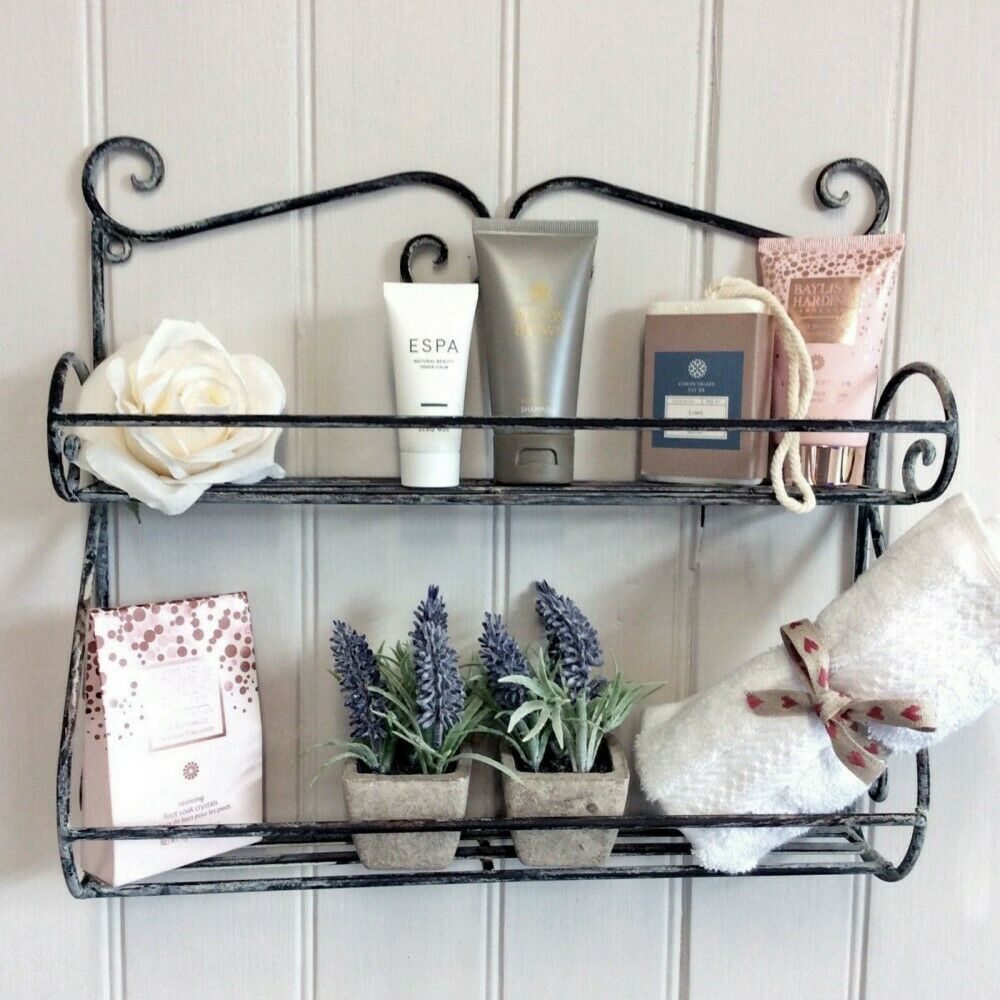
What shelf depth works best for a bathroom application?
For display shelves holding accessories, jars, and rolled towels, a depth of eight to ten inches is my practical sweet spot. This accommodates most bathroom accessories comfortably without projecting so far from the wall that the shelf feels intrusive in a typically compact bathroom space. Shelves above toilets should stay under twelve inches deep to avoid interfering with comfortable use of the toilet and the tank access that occasional maintenance requires. For shelves intended to hold larger items like folded towels or small plants, ten to twelve inches provides better stability and visual proportion without creating clearance problems in most standard bathroom configurations.
What’s a realistic budget for retro bathroom shelves?
Simple pipe shelf kits with reclaimed-look wood boards start around $40 to $80 for a single shelf in basic configurations. Cast iron scroll bracket sets run $20 to $60 per pair, with shelf boards adding $15 to $40 depending on material and size. Mid-range complete shelf systems with quality brackets and solid wood boards typically cost $80 to $200 per shelf installed with your own labor. Custom-built retro shelves from local woodworkers or metalworkers start around $150 per shelf and scale with material choices and bracket complexity. I spent approximately $95 on my two pipe shelves combined and consider that among the best value investments in my entire bathroom renovation given their daily visual and practical contribution.

Bathroom shelves design

Chrome & Glass Shelving Glass shelving unit, Shelving, Shelving unit

Related Posts:
- How to Use Towels to Decorate a Bathroom
- Bathroom Metal Towel Shelf
- Cheap Glass Bathroom Shelves
- Modern Bathroom Shelf Ideas
- How Long Should Shelf Be Above Toilet
- Narrow Bathroom Glass Shelf
- Small Floor Shelf for Bathroom
- Bathroom Towel Rack Shelf Wall Mounted
- Decorative Bathroom Shelf With Towel Bar
- Polished Chrome Bathroom Shelf